Three Minutes of Lies: Inside the Trailer Industry That Sold You a Movie You Never Saw
Photo: Daniel Christensen, CC BY-SA 3.0, via Wikimedia Commons
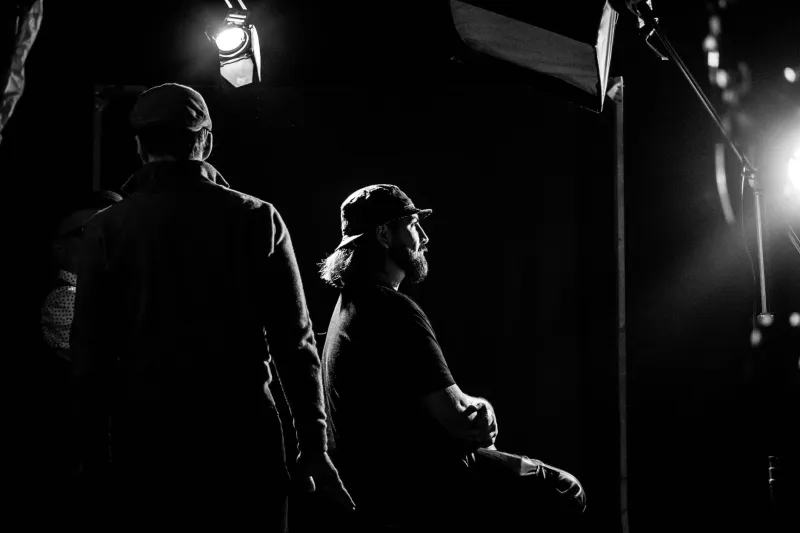
Somewhere in Los Angeles right now, a room full of editors is agonizing over the placement of a single bass drop. Not for a film — for its advertisement. The movie itself might still be in post-production. The trailer, though, is already three drafts deep, and a test audience in Burbank just told the marketing team that the joke at the 90-second mark "didn't land."
Welcome to the trailer industrial complex — a parallel film industry most moviegoers never think about, even though it shapes what we buy tickets to more than any review ever could.
The Trailer Is Not Made by the People Who Made the Movie
Here's the open secret of Hollywood marketing: the director of your favorite film probably had almost nothing to do with its preview. Trailers are overwhelmingly cut by dedicated houses — companies like Trailer Park, Buddha Jones, and AV Squad — that specialize in exactly this craft. They receive raw footage, dailies, sometimes barely-assembled scenes, and their job is to distill two hours into a sales object.
And it is a genuine craft. A great trailer editor is doing structural surgery: building tension, planting a laugh, engineering a beat of silence before the title card slams in. The best of them will tell you they're making a short film about a film. The worst of them are making the same trailer over and over, because the data says it works.
That's the other half of the story. Modern trailers are tested — screened for recruited audiences, tracked with biometric feedback in some cases, A/B'd across digital platforms. Pacing, needle drops, even the font of the title card gets validated. The "trailer cut" of a blockbuster is arguably more data-refined than the film itself.
Why Every Blockbuster Now Shows You Its Third Act
The economics are brutal and simple: a studio has one weekend to justify a $200 million spend. Ambiguity is a risk. Surprise is a risk. So the marketing logic grinds toward clarity, and clarity, in trailer-speak, means plot.
Watch the previews for most major franchise entries today and you can reconstruct the entire narrative arc — the reluctant hero, the betrayal, the seemingly fatal setback, the airborne final battle. The joke lands in the trailer or it doesn't make the movie's marketing plan. The villain is revealed because hiding the villain tested poorly with casual audiences who don't know the source material.
Critics have a name for the result: "trailer-ification." The film starts to resemble its own advertisement, because the advertisement has become the product's most important form. Directors have noticed. Some negotiate contractual control over their marketing. Christopher Nolan famously keeps his previews cryptic. Jordan Peele built entire campaigns around withholding the premise. A24 turned restraint into a brand identity — their trailers often tell you almost nothing and dare you to be curious anyway.
It's telling that when a studio does go sparse, it becomes a story in itself. That's how abnormal the norm has become.
The Editors Aren't the Villains Here
Talk to people who cut trailers and a consistent theme emerges: they know exactly what the criticism is, and many share it. Their constraints aren't artistic choices — they're mandates from clients armed with tracking data and nervous executives. The two-and-a-half-minute format, the obligatory sound-up beat, the swan-song cover song — these aren't laziness, they're the grammar of a genre that has calcified under commercial pressure.
The trailer houses that do the most interesting work are usually the ones attached to studios and distributors that let them. Which points to the real variable: not the editors, but the risk tolerance of whoever signs the checks.
A Short List of Campaigns That Respected Your Intelligence
If you want proof that restraint can sell, look no further than the last decade's best spoiler-free marketing:
- Barbie (2023) — Sold a vibe, not a plot. The bleach-blonde teaser told you the tone and nothing else.
- A Quiet Place (2018) — A trailer built almost entirely on sound design and silence, revealing no monster and no resolution.
- Parasite (2019) — Every preview sold a different genre. None of them lied, exactly. All of them protected the film.
- Tenet (2020) — Deliberately incomprehensible, and better for it.
- Get Out (2017) — Marketed as pure horror while hiding its sharpest satirical blade.
- Everything Everywhere All at Once (2022) — Sold chaos and emotion without explaining a single mechanic of the multiverse.
- Nope (2022) — Withheld the spectacle so thoroughly that the sky itself became a spoiler risk.
Each of these worked because someone in the chain decided that curiosity is a more durable asset than certainty.
What the Audience Can Actually Do
Trailer fatigue is real, and studios track it. Skipping previews, muting them in theaters, watching on a delay — these behaviors show up in the data eventually. The clearest signal, though, is the same one that always moves Hollywood: reward the campaigns that trust you. Buy the ticket for the movie you're intrigued by, not the one whose entire plot you've already memorized.
The trailer will always be a sales pitch. It doesn't have to be a summary. The difference between those two things is where moviegoing still holds a little magic.