Reading the Screen: How Foreign Films Rewired What American Audiences Demand From a Story
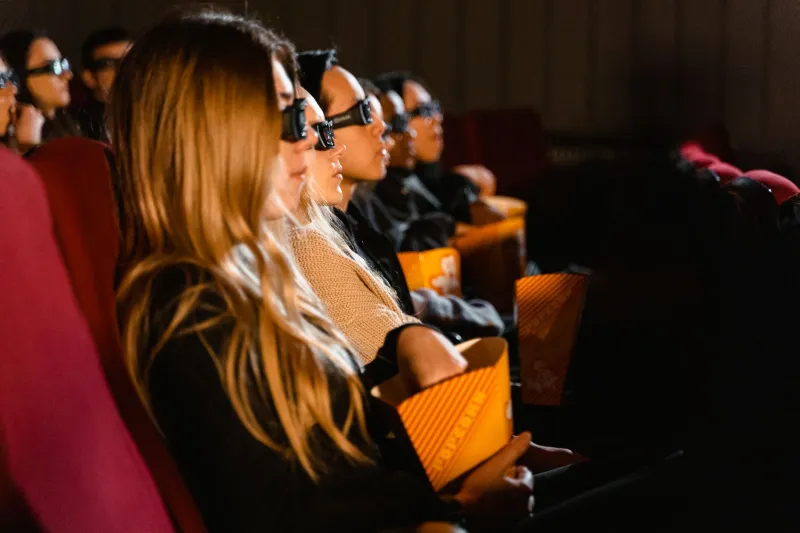
There was a time — not even that long ago — when suggesting a subtitled film at a Friday night movie night could empty a room faster than a bad trailer. "I don't want to read a movie" was the go-to excuse, delivered with the casual confidence of someone who had never questioned it. That era is fading fast, and the shift in what's replacing it is more interesting than most people in Hollywood seem willing to admit.
American audiences aren't just tolerating foreign-language films anymore. They're seeking them out, rewatching them, and increasingly holding domestic releases up against them — and finding the comparison unflattering.
The Moment the Dam Broke
You can trace a lot of this back to Parasite. When Bong Joon-ho's Korean class thriller swept the 2020 Oscars — including Best Picture — it didn't just make history. It gave millions of American viewers permission to care about subtitled cinema in a way that felt socially acceptable, even cool. Suddenly, Parasite watch parties were happening in living rooms across the country. People who had never deliberately sought out a foreign film were streaming it, then immediately diving into Bong's back catalog.
But Parasite was a catalyst, not a cause. The groundwork had been laid steadily for years. Netflix's aggressive investment in international content — Spanish thriller Money Heist, Korean drama Squid Game, French heist series Lupin — had already been conditioning American viewers to read their screens without feeling like they were doing homework. By the time Squid Game became a genuine cultural phenomenon in 2021, the idea of subtitles as a barrier had largely collapsed for a significant chunk of the US audience.
What Subtitles Actually Taught American Viewers
Here's the thing that doesn't get discussed enough: watching subtitled content doesn't just change your language habits. It changes your visual attention. When you're reading dialogue at the bottom of the frame, you become more attuned to what's happening in the rest of the image — the background details, the actor's body language, the way a director uses negative space. You start noticing cinematography in a way that purely passive viewing doesn't demand.
French cinema, in particular, has been a quiet teacher in this regard. Directors like Céline Sciamma (Portrait of a Lady on Fire) and Jacques Audiard (Dheepan, Rust and Bone) build stories at a pace that American studio films rarely allow themselves. Scenes breathe. Silence carries weight. A conversation doesn't always end with someone landing a punchline or a plot revelation — sometimes it just ends, the way real conversations do.
Korean thrillers bring something different: an almost architectural approach to tension and genre. Films like The Wailing, A Tale of Two Sisters, or anything in Park Chan-wook's catalog treat genre conventions as a foundation to build on rather than a formula to execute. American viewers raised on Marvel's brand of tightly managed narrative momentum have found something genuinely disorienting — and thrilling — about stories that refuse to telegraph their intentions.
The Badge-of-Honor Effect
Culturally, something interesting has happened with subtitles specifically. They've gone from being a mark of effort — something you endured for art-house credibility — to a genuine point of pride among a broad swath of younger American viewers. On social media, recommending a subtitled film has become a way of signaling taste, curiosity, and a certain openness to the world.
This isn't purely pretentious posturing, either. A lot of it is genuine enthusiasm from people who discovered that stories told from radically different cultural perspectives hit differently. A Korean family drama about generational pressure lands with force for first-generation American kids who recognize the emotional architecture, even if the setting is unfamiliar. A Spanish film about grief or a Japanese drama about aging speaks to universal experiences in ways that feel less packaged than their Hollywood equivalents.
The subtitled film has, in a strange way, become the recommendation you make when you actually want someone to feel something.
Hollywood's Awkward Position
For the major studios, this shift creates a genuinely uncomfortable creative problem. The instinct, as always, is to absorb rather than compete. We've already seen this play out: Parasite gets a planned English-language series adaptation. Squid Game gets a US reality competition spin-off. Money Heist gets a Korean remake. Hollywood's response to being outmaneuvered creatively has historically been to repackage what worked and sell it back without the subtitles.
But that approach increasingly misses the point. What American audiences are responding to in foreign cinema isn't just a plot structure or a visual concept that can be transplanted. It's a sensibility — a willingness to trust the audience, to let discomfort sit, to resist the gravitational pull of the satisfying resolution. That's not something you can license.
The studios that are actually paying attention aren't just looking at what foreign films are doing structurally. They're looking at what those films assume about their audiences — that viewers can handle ambiguity, that they don't need every emotional beat underlined, that a slow scene isn't a broken scene. Those assumptions are still radical in mainstream Hollywood.
The Pacing Problem
Perhaps the most lasting impact of this international cinema surge is what it's done to American viewers' relationship with pacing. The hyper-edited, stimulus-dense rhythm of modern blockbusters — which we've talked about plenty at CinateYEG — now has a direct competitor in the cultural conversation. Viewers who've spent time with the measured tempo of a Park Chan-wook film or the deliberate quietude of a Hirokazu Kore-eda drama come back to the multiplex with recalibrated expectations.
Not everyone, obviously. The audience for fast-cut action spectacle isn't disappearing. But there's a growing cohort of American viewers — younger, socially connected, culturally curious — who are actively seeking out films that ask more of them. And that cohort is vocal enough to shift the conversation.
Where This Goes Next
The honest answer is that nobody's quite sure. Streaming platforms will keep investing in international content because the numbers support it. American audiences will keep discovering new cinematic traditions — Indian parallel cinema, Romanian new wave, Brazilian social realism — that expand their sense of what film can do. And the conversation about what makes a story worth telling will keep getting more complicated and more interesting.
What seems clear is that the era of subtitles as a dealbreaker is over for a meaningful portion of the American audience. The screen-readers have arrived, and they've brought higher expectations with them. Whether Hollywood rises to meet those expectations or keeps trying to replicate them at arm's length is, honestly, one of the more compelling stories in American culture right now.
And unlike a lot of Hollywood stories these days, this one doesn't have a predictable ending.