Bad Guys Used to Mean Something: How Hollywood Forgot to Write a Real Villain
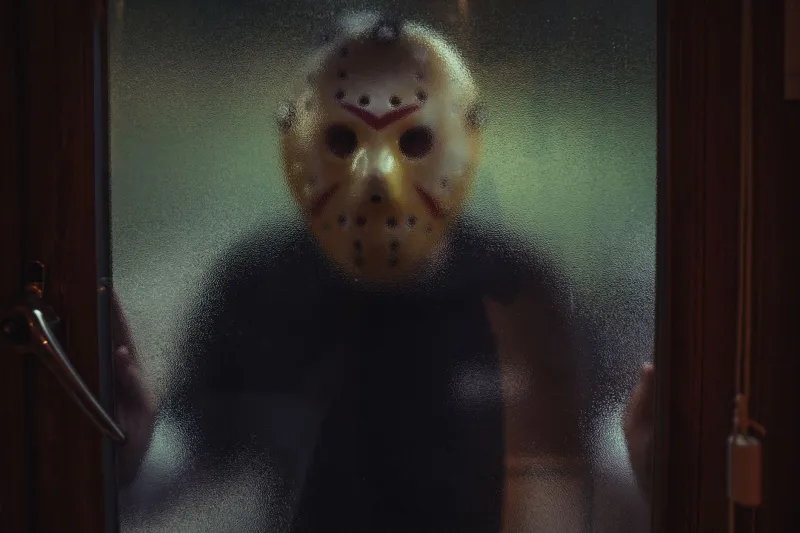
Think back to the last movie villain who genuinely unsettled you. Not one who blew up a city or monologued about world domination — but one who made you lean forward in your seat because you almost understood where they were coming from. That feeling, that uncomfortable proximity to a character who does terrible things for reasons that somehow make sense, is increasingly rare at the multiplex. And its absence says a lot about where mainstream cinema has landed.
Hollywood hasn't stopped making villains. It's just stopped making them matter.
The Gold Standard Nobody's Reaching For
There's a reason people still bring up Hannibal Lecter, Anton Chigurh, and Amy Dunne in conversations about great screen antagonists decades after their films came out. These characters weren't evil because the plot required them to be. They were evil — or at least profoundly dangerous — in ways that felt specific, earned, and psychologically coherent. You could trace the logic of their worldview even when it horrified you.
Hannibal Lecter operated from a warped but internally consistent code of aesthetics and contempt. Anton Chigurh was a kind of nihilistic force of nature, but one grounded in a philosophy he actually believed. Amy Dunne from Gone Girl was terrifying precisely because her grievances weren't entirely wrong — just her methods. These weren't obstacles. They were arguments. They made you think.
Compare that to the average blockbuster villain of the last several years. A shadowy figure with a tragic backstory delivered in a five-minute flashback. A monologue about how the system failed them. A plan so large and abstract it's impossible to emotionally engage with. And then, inevitably, defeat in a climactic CGI brawl that resolves everything cleanly before the credits roll.
The Formula That Ate Complexity
Part of what's happened is structural. The hero's journey formula — already a simplified reading of Joseph Campbell — has become so dominant in franchise filmmaking that it's essentially calcified into a template. And that template has very specific requirements for what a villain can and cannot be.
The antagonist needs to be clearly coded as wrong. Their motivations need to be comprehensible enough to explain in a trailer but not sympathetic enough to complicate audience allegiance to the hero. They need to lose in a way that feels satisfying without raising any lingering questions. In other words, they need to be functional, not human.
This is what focus-group testing tends to produce. When studios run early cuts by test audiences and optimize based on approval scores, moral ambiguity tends to get sanded down. Audiences in those controlled environments often respond poorly to feeling confused or challenged by a character they're supposed to dislike. The notes come back, the edges get softened, and what started as something interesting becomes something palatable.
Streaming's Role in Flattening the Bad Guy
The rise of streaming has added another layer to this problem. When you're producing content designed to be consumed quickly, often in fragmented viewing sessions across multiple devices, psychological depth becomes a liability. A villain whose menace requires patience and attention to fully register doesn't translate well to a platform where half your audience is also scrolling their phone.
Streaming has also normalized the extended universe model, where villains sometimes need to survive across multiple installments or be redeemed for a spin-off. It's hard to write a genuinely threatening antagonist when the business model requires keeping them around and eventually marketable. Complexity gets replaced with mystique — lots of ominous lighting and cryptic dialogue that signals depth without actually providing any.
The result is a generation of villains who feel like concepts rather than characters. They represent something — chaos, authoritarianism, unchecked power — without ever becoming someone.
What We Actually Lose
This isn't just an aesthetic complaint. Compelling villains serve a function in storytelling that goes beyond providing the hero with someone to fight. Great antagonists hold a mirror up to the culture. They embody fears, expose contradictions, and ask uncomfortable questions about who we are and what we value.
The Joker, in his best iterations, isn't just a guy who causes mayhem — he's a critique of social order, of the systems that create and discard people. Walter White's transformation in Breaking Bad worked because his villainy emerged from recognizable human failures: pride, resentment, the desire to feel significant. These characters resonated because they were doing something the story needed them to do beyond moving the plot forward.
When you flatten villains into one-dimensional obstacles, you don't just lose interesting characters. You lose the opportunity to say anything real about the world. Your story becomes a closed loop — good wins, evil loses, no questions asked. That might be commercially safe, but it's also kind of empty.
The Exceptions That Prove the Rule
It would be unfair not to acknowledge the films that have gotten this right recently. The Batman gave us a Riddler whose extremism was rooted in genuine systemic grievance, making him more disturbing than a purely cartoonish threat. Parasite constructed its antagonism from class dynamics rather than a single evil character, which was arguably more unsettling than any individual villain could be. Even within the superhero genre, Killmonger from Black Panther landed so hard with audiences partly because his argument was difficult to dismiss.
These examples are notable precisely because they stand out. They're the exceptions critics point to when defending the genre, which tells you something about how rare that level of craft has become.
The Fix Isn't Complicated — It's Just Risky
Writing a genuinely compelling villain requires a kind of creative courage that's hard to maintain inside a system optimized for broad appeal. It means letting a character be right about some things. It means allowing moral discomfort to sit unresolved. It means trusting your audience to hold complexity without needing it explained or neutralized.
That's a risk. Studios and streamers are understandably reluctant to take it when there's franchise money on the line and quarterly numbers to hit. But the irony is that the villains who took that risk — the ones who were allowed to be genuinely, uncomfortably complex — are the ones people are still talking about twenty years later.
Hollywood used to know that. Somewhere along the way, it forgot. And until it remembers, the bad guys are going to keep losing before they ever really show up.