Missing in Action: The Film Genres That Vanished from American Multiplexes — and Where They Went
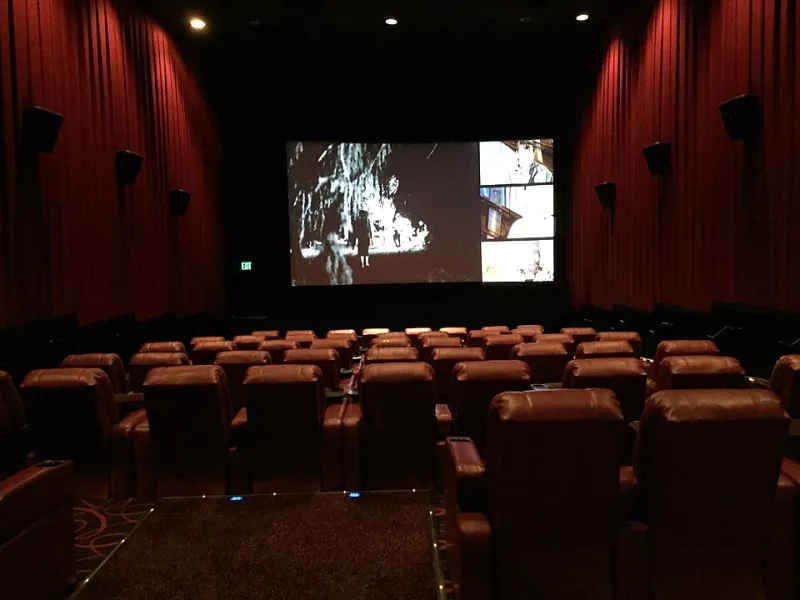
Photo: Famartin, CC BY-SA 4.0, via Wikimedia Commons
Picture a Saturday night at your local multiplex circa 2003. You had options. A Julia Roberts romantic comedy. A taut Denzel Washington thriller. Maybe a grown-up drama with a cast you recognized and a story that didn't require a franchise decoder ring to follow. The menu was varied. The middle of the market was alive.
Now picture this weekend's showtimes. Count the genres. Notice what's missing.
Something happened to the American movie theater — and it wasn't just the pandemic, though that sped things up considerably. Whole categories of film have quietly evacuated the multiplex, and most of us have gotten so used to their absence that we've stopped noticing the gap.
The Incredible Shrinking Middle
The film industry has always had a rough middle. Studios love tentpoles — massive IP-driven events that justify enormous marketing budgets and guarantee international revenue. They also tolerate low-budget genre films that cost little and can break out unexpectedly. What they've increasingly stopped making, or stopped releasing theatrically, is everything in between.
The mid-budget film — somewhere in the $20 million to $80 million range — used to be the engine of Hollywood's creative output. That's where romantic comedies lived. Where adult thrillers were born. Where character-driven dramas found their audience. These weren't prestige art films, but they weren't empty spectacle either. They were movies made for grown-ups who wanted a story, a few laughs or a few scares, and two hours well spent.
The economics stopped working around the mid-2010s. As blockbuster budgets ballooned and marketing costs followed, studios needed every release to perform like an event. A rom-com that made $60 million domestic used to be a win. In the current calculus, it's a disappointment. So the studios stopped making them — at least for theaters.
Genre by Genre: The Casualty List
Romantic Comedies. This one gets talked about a lot, and for good reason — the theatrical rom-com is functionally extinct at the studio level. The genre didn't die because audiences stopped wanting love stories. Netflix's data suggests the opposite: romantic comedies are among the most-watched content on the platform. But they migrated entirely to streaming, where the economics work differently and the risk is lower. What was lost is the communal experience — the packed theater, the shared laughter, the collective sigh. Crazy Rich Asians (2018) proved there was still a theatrical audience for the genre, but the industry mostly shrugged and kept streaming.
Mid-Budget Thrillers. Remember when you could count on a few smart, tense, star-driven thrillers every year? Films like The Fugitive, Inside Man, Michael Clayton — movies that trusted their audience to follow a plot without explosions explaining everything. These have nearly vanished from multiplexes. Occasionally one breaks through (Knives Out being the obvious recent example), but they're rare events now rather than a reliable genre staple.
Adult Drama. This might be the deepest cut. The serious, non-prestige drama — not Oscar bait, just a well-made film about human beings in recognizable situations — has essentially left the building. It didn't stop being made. It stopped being released where most people can see it. These films now live on streaming platforms, in limited runs at art house theaters, or on VOD where they get lost in the algorithmic noise.
Westerns. Once the foundational genre of American cinema, the Western has dwindled to occasional prestige projects and streaming experiments. Hell or High Water showed in 2016 that audiences would show up for a smart, grounded Western — and then the genre went quiet again.
Why the Economics Broke
The streaming explosion didn't just create new viewing options. It fundamentally changed the risk calculation for mid-budget theatrical releases. Why spend $40 million making a thriller and another $30 million marketing it theatrically when you can spend $25 million, release it on your platform, and count it as content that retains subscribers?
The answer, of course, is that theatrical releases do something streaming can't fully replicate — they generate cultural conversation, critical attention, and the kind of word-of-mouth that builds a film's reputation over time. But that argument is hard to win in a quarterly earnings call.
Audience fragmentation has made things worse. When viewers can choose from thousands of titles on any given night, the theatrical experience has to compete harder for attention. Studios have responded by leaning into event cinema — the kind of film that demands to be seen on a big screen because of spectacle, not story. That's a reasonable strategy for Top Gun: Maverick. It's a death sentence for a mid-budget character piece.
The Underground Comeback
Here's where the story gets more interesting, though. These genres didn't die — they went underground, and some of them are quietly finding new life in unexpected places.
Independent theaters have become sanctuaries for the adult drama and the mid-budget thriller. Specialty distributors like A24, Neon, and MUBI are releasing exactly the kinds of films that studios abandoned, and they're finding audiences willing to seek them out. Past Lives, All of Us Strangers, Saltburn — these films found real theatrical traction precisely because they offered something the multiplex doesn't.
The romantic comedy is also showing signs of life outside the streaming ghetto. A wave of indie rom-coms has been making noise on the festival circuit, and there's a growing argument that the genre needs to return to theaters — where its communal pleasures actually land — rather than being consumed alone on a laptop.
And then there's the audience itself. Younger viewers who grew up on streaming are increasingly curious about the theatrical experience, and some of them are discovering older genre films through repertory screenings and film clubs. The mid-budget thriller they never got to see in theaters is finding them through Letterboxd recommendations and 35mm revival screenings.
What Cinema Loses Without Genre Diversity
This isn't just nostalgia talking. Genre diversity in theaters matters because it determines who gets to go to the movies and feel like the movies were made for them. When the multiplex becomes exclusively a venue for spectacle, it implicitly tells a large portion of the audience — older viewers, people who prefer stories over set pieces, anyone who doesn't care about cinematic universes — that this space isn't for them.
The genres that disappeared weren't just entertainment. They were mirrors. The romantic comedy reflected how we think about love and partnership. The adult thriller reflected our anxieties about power and justice. The drama held up a version of ordinary life and asked us to look at it seriously.
When those mirrors go dark, something real is lost — even if the box office numbers don't show it.
The good news is that audiences haven't stopped wanting these films. They've just had to work harder to find them. And the filmmakers making them, often on smaller budgets and outside the studio system, are proving that the genres aren't dead. They're just waiting for the industry to remember why they mattered.