Small Stories, Big Screens: The Quiet Revolution Bringing Human Drama Back to Movie Theaters
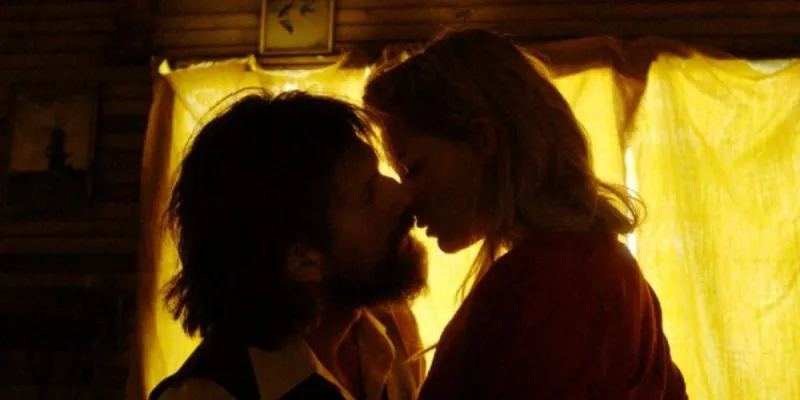
Photo: intimate film scene two actors emotional conversation dramatic lighting indie movie, via static0.cbrimages.com
Not long ago, conventional wisdom in Hollywood held that if a movie didn't have a recognizable IP, a post-credits scene, or a budget north of $150 million, it probably belonged on a streaming platform. Theatrical releases were for event films. Everything else was content.
That logic is cracking — and the cracks are getting interesting.
The Franchise Ceiling Nobody Wanted to Admit Was There
For roughly a decade, superhero films and franchise sequels dominated not just box office charts but the entire conversation around what movies could be. The MCU, in particular, restructured how studios thought about storytelling — everything became a setup for something else, every character a potential spinoff, every ending a teaser for the next installment.
It worked spectacularly well, until it didn't.
Audience fatigue with the formula has been building quietly for a few years, but the numbers have started to make it undeniable. Several high-profile franchise entries have underperformed in ways that would've been unthinkable five years ago. Meanwhile, smaller films — movies built around people rather than powers — have been pulling off something remarkable: they're getting people off their couches and into theaters.
The success of films like Past Lives, All of Us Strangers, Aftersun, and A Real Pain — all intimate, dialogue-driven, deeply human stories — has reminded studios and distributors of something the indie world never forgot: audiences will show up for a great story about a person if you give them a reason to.
What "Character-Driven" Actually Means (and Why It Got Sidelined)
The term gets thrown around a lot, so it's worth being specific. A character-driven drama isn't just a film without explosions. It's a film where the central tension is internal — where what's at stake is someone's sense of self, their relationships, their understanding of who they are and where they belong. The plot exists to pressure-test the character, not the other way around.
These films fell out of mainstream favor for a simple, depressing reason: they're hard to market. You can't put a character's emotional reckoning on a billboard. You can't cut a trailer around the moment someone finally says what they've been holding back for twenty years. The tools of the Hollywood hype machine — spectacle, action, recognizable iconography — don't translate well to quiet, observational filmmaking.
So studios stopped making them, or relegated them to the awards-season dumping ground: a limited release in December, a few weeks of Oscar buzz, then a streaming migration before most people even had a chance to see them in theaters.
Something Is Shifting
But the landscape is changing, and a few factors are converging to make character-driven drama viable again in a way it hasn't been in years.
First, there's the streaming saturation problem. Audiences are drowning in content, and paradoxically, that's making the theatrical experience feel more valuable, not less. Going to a movie theater is increasingly an act of intention. People want to be there. And when you're making an intentional choice to leave your house and pay for a ticket, you're often in the mood for something that will actually affect you — not just distract you.
Second, there's the AI anxiety factor. As generated content floods every corner of digital media, authentic human storytelling has taken on a new kind of cultural weight. A film made by a person, about people, expressing something genuinely felt — that's become a specific and meaningful thing in a way it wasn't before the generative AI wave. Audiences can feel the difference, even if they can't always articulate it.
Third, and maybe most importantly, a new generation of filmmakers is betting on human stories with unusual confidence and skill.
The Filmmakers Making It Happen
Directors like Celine Song (Past Lives), Charlotte Wells (Aftersun), and Jesse Eisenberg (A Real Pain) represent something exciting in American cinema right now: a cohort of storytellers who grew up watching both prestige indie cinema and streaming content, who understand the economy of attention, and who are making films that demand yours.
What's notable about this wave is that many of these filmmakers are making their feature debuts or early-career work, which means they didn't come up through the development system that optimizes for franchise potential. They came up through film festivals, short films, and the kind of creative environments where the question isn't "what's the IP?" but "what's the story?"
Emerging directors in this space often cite similar influences — the slow cinema movement, the Iranian New Wave, early Cassavetes, the '90s American indie boom — but they're synthesizing those influences into something that feels genuinely contemporary. These aren't nostalgia projects. They're films that feel urgently of this moment.
What Audiences Are Actually Hungry For
Talk to regular moviegoers — not critics, not industry insiders, just people who love going to the movies — and a pattern emerges. They're tired of feeling like they're watching a product. They want to feel something. They want to walk out of a theater and need a few minutes before they can talk about what they just saw.
That's not a new desire. It's actually the oldest desire in cinema. But it's been underserved long enough that when a film delivers it, the response can be almost disproportionate — people see these films multiple times, press them on friends, write about them with an urgency that feels almost grateful.
The theatrical experience amplifies this. There's something about sitting in a dark room with strangers and watching a character quietly fall apart — or quietly find their way — that hits differently than watching the same film on a laptop. The communal silence of an audience fully absorbed in a human story is its own kind of magic.
The Road Ahead
None of this means franchises are going away. They're not. But the binary thinking — spectacle films for theaters, everything else for streaming — is starting to dissolve, and that's genuinely good news for cinema.
Distributors are getting smarter about platform-matching, recognizing that the right character-driven film, released with patience and genuine critical support, can build word-of-mouth momentum that sustains a theatrical run in ways that a front-loaded franchise opening weekend cannot.
The films that are leading this quiet resurgence aren't asking for much. They don't need to be the biggest thing in culture. They just need a room, an audience, and enough trust to let something real unfold at human scale.
Right now, that feels like exactly enough.