Subtitles and Sold-Out Screenings: The Quiet Revolution Changing What Americans Watch
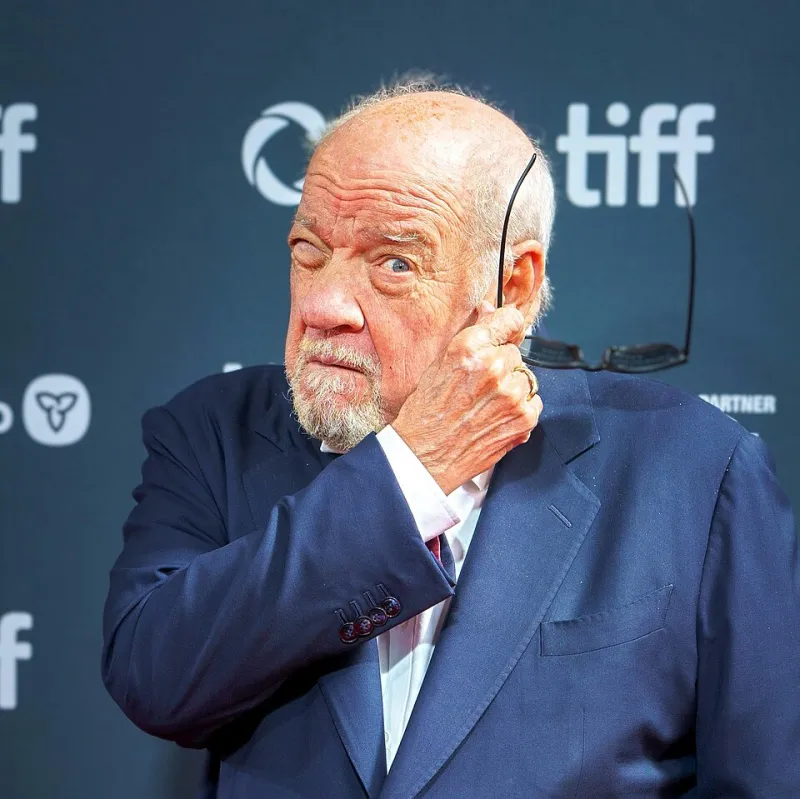
Photo: Jay Dixit, CC BY-SA 4.0, via Wikimedia Commons
Not long ago, the conventional wisdom in Hollywood went something like this: American audiences won't read subtitles. It was treated as an immutable fact of the market, the kind of thing that got repeated in pitch meetings and used to justify why foreign-language films rarely got wide theatrical releases in the US. Then Parasite won Best Picture. Then Squid Game became the most-watched show in Netflix history. Then a generation raised on anime, K-dramas, and algorithmically surfaced international content quietly made the old wisdom obsolete.
Something is genuinely different now — and it's worth understanding exactly what changed, and what it means for the future of cinema.
The Streaming Effect
It's impossible to tell this story without talking about streaming platforms, which more or less accidentally created the conditions for an international film revolution in American living rooms. When Netflix, Hulu, and their competitors needed content to fill their libraries, they turned to international markets and began licensing — and eventually producing — films and series from South Korea, Spain, France, Mexico, Brazil, and beyond.
The result was a kind of passive exposure that theatrical distribution could never have achieved. You don't have to decide to seek out a subtitled film when it appears as a recommendation on your home screen. You just start watching. And once you've watched a few, the mental barrier that supposedly made American audiences subtitle-averse starts to feel pretty flimsy.
"The friction has basically disappeared," says film programmer and critic Daniel Osei, who curates international programming for a regional film festival in the Midwest. "When you had to find a specialty theater or track down a DVD, there was a real effort involved. Now the film is just there. And when people actually watch these movies, they realize pretty quickly that reading subtitles doesn't diminish the experience — it might actually sharpen it."
The Parasite Moment and What Came After
Bong Joon-ho's Parasite didn't just win four Academy Awards in 2020 — it cracked something open culturally. Here was a Korean-language film about class anxiety and social stratification that resonated so deeply with American audiences that it swept the Oscars, beating out English-language competition that included 1917 and Once Upon a Time in Hollywood. Bong's now-famous quip about the "one-inch-tall barrier of subtitles" became a rallying cry for international cinema advocates.
But the Parasite effect wasn't just about one film. It gave Hollywood studios and streaming platforms a data point they couldn't ignore: American audiences would not only watch a subtitled film, they'd champion it, talk about it obsessively, and show up for it in numbers that rivaled mainstream releases.
What followed was a noticeable shift in how international content got marketed and positioned in the US. Films that might previously have been quietly buried in the arthouse circuit started getting real promotional campaigns. Directors like Ryûsuke Hamaguchi (Drive My Car, Wheel of Fortune and Fantasy), Céline Sciamma (Portrait of a Lady on Fire), and Lukas Dhont (Close) found American audiences that were genuinely hungry for what they were making.
A New Generation of Viewers
The generational dimension of this shift is hard to overstate. Younger American viewers — particularly those in their teens and twenties — have grown up in a media environment where international content is simply part of the landscape. Anime has been mainstream in American youth culture for decades. K-pop fandom created deep cultural investment in South Korean entertainment broadly. TikTok and YouTube have made geographic borders nearly irrelevant in terms of what media people encounter.
For these viewers, the idea that a film's quality is diminished by its language feels genuinely strange. They've been trained by years of digital media consumption to engage with content from anywhere, and they bring that openness to their film watching.
"My students are watching stuff I've never heard of," says a film studies professor at a university in the Pacific Northwest. "They're coming to class having already seen the latest Thai horror film or a Taiwanese drama from the early 2000s. They found it on a streaming platform or a recommendation thread. The gatekeeping that used to define how international cinema reached American audiences just doesn't work the same way anymore."
How International Cinema Is Reshaping American Storytelling
The influence isn't flowing in just one direction. As American filmmakers and studios absorb more international cinema, it's starting to show up in the stories they choose to tell and the techniques they deploy. The slow-burn narrative patience of East Asian cinema has crept into American indie filmmaking. The social realism of European film traditions is influencing a new wave of American dramas. Even the structural experimentation of Latin American cinema is finding echoes in how younger American directors approach their work.
This cross-pollination has always happened to some degree — Kurosawa influenced Sergio Leone who influenced George Lucas — but the speed and directness of the exchange is new. When an American filmmaker can watch the entire filmography of a South Korean director on a streaming platform in a weekend, the influence cycle accelerates dramatically.
Some Hollywood studios have taken note in more direct ways. Remakes and adaptations of international hits have become a reliable content strategy — The Departed was based on a Hong Kong film, Oldboy got an American remake, and several K-drama properties are currently in development as English-language series. It's a mixed bag creatively, but it signals that the industry acknowledges international cinema as a source of genuinely compelling material.
What This Means for Film Culture
There's something quietly exciting about this moment, even if it's easy to miss amid all the franchise noise. American film culture is becoming more porous, more curious, and more willing to engage with stories that come from somewhere genuinely different. That's not a small thing.
Film festivals like Sundance, SXSW, and Tribeca have responded by giving more prominent placement to international work. Specialty distributors like MUBI, Criterion Channel, and Neon have found real audiences for films that would have been invisible in the American market a decade ago.
The subtitle barrier hasn't disappeared entirely — wide theatrical releases for foreign-language films are still rare, and the mainstream multiplex remains largely an English-language space. But the direction of travel is clear. American audiences are more open to international cinema than they've ever been, and that openness is starting to feed back into the films that get made and the stories that get told.
Bong Joon-ho was right about that one-inch barrier. Turns out, it wasn't very tall at all.