The Invisible Hand: How Sound Designers Are Quietly Directing Your Emotions
There's a moment in No Country for Old Men where Anton Chigurh walks through a motel corridor. No music. No dramatic cue. Just the low, pressurized hiss of a cattle gun and the ambient creak of a building that feels like it's holding its breath. That moment is terrifying — and almost none of the terror comes from the image.
Yet ask most filmgoers who made that scene unforgettable, and they'll name the Coen Brothers. Maybe Roger Deakins, the cinematographer. Rarely, if ever, will they land on Skip Lievsay, the sound designer who built the sonic architecture that made the whole thing feel like a slow-motion nightmare.
This is the quiet paradox at the heart of Hollywood: the craft most responsible for your emotional experience in a movie theater is the one you're least likely to think about after you leave.
The Shift Nobody Talks About
Sound design wasn't always treated as a creative discipline. For most of Hollywood's first century, it was closer to plumbing — necessary, invisible, and handled by technicians rather than artists. The turning point came in the mid-1970s, when Walter Murch's work on Apocalypse Now and The Conversation forced the industry to reckon with sound as something more than an accompaniment to picture.
Murch wasn't just recording and mixing. He was composing emotional subtext. The helicopters in Apocalypse Now don't just announce war — they become war, bleeding into the ceiling fans in Willard's hotel room until the boundary between memory and present collapses. That kind of deliberate, layered storytelling through sound was genuinely new, and it cracked open a door that hasn't closed since.
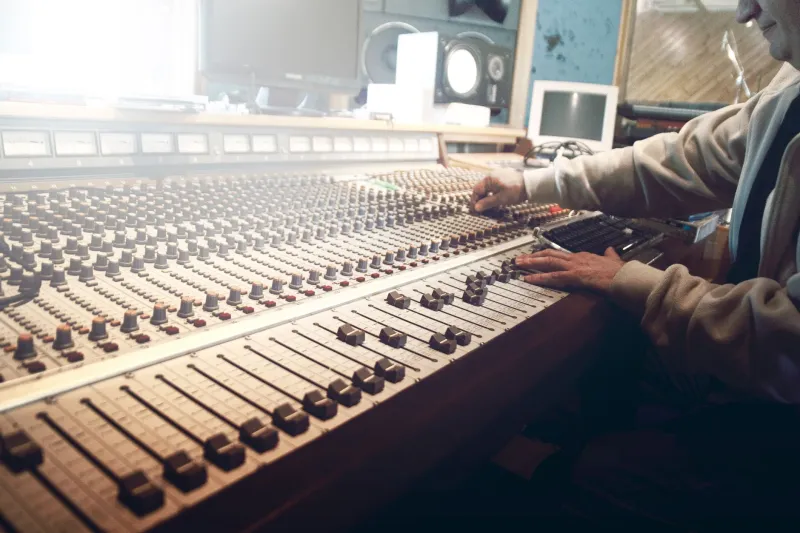
Today, working sound designers describe their job in terms that sound more like directing than engineering. "I'm thinking about the internal state of the character," one veteran mixer who's worked on major studio productions explained in a recent industry panel. "The audience doesn't know I'm doing it, but if I pull the room tone down slightly every time a character is about to make a bad decision, their nervous system registers it before their brain does."
That's not mixing. That's manipulation — in the best possible sense.
What Cinematography Gets Credit For
Here's where it gets a little complicated. Cinema culture has built a rich vocabulary around the visual: golden hour lighting, shallow depth of field, the Kubrick stare. Film school kids can tell you what an anamorphic lens does to a bokeh. But ask those same students to describe what a convolution reverb achieves emotionally, and you'll mostly get blank stares.
The result is that sound work gets absorbed into the credit of whoever's name is biggest on the poster. A director known for building tension is praised for the anxiety in a particular sequence, when the anxiety was constructed entirely in post-production by a sound team working with carefully sculpted low-frequency drones and strategically missing ambient detail.
"We're the ghost writers of cinema," said one Los Angeles-based sound editor who's contributed to several acclaimed independent films. "Directors know what we do. The industry knows. But audiences have this visual bias, and honestly, so does most film criticism."
That bias has real consequences — for awards recognition, for career visibility, and increasingly, for how sound work gets budgeted at the exhibition level.
The Theater Problem
Here's where the conversation gets uncomfortable. Sound design at the creative level has never been more sophisticated. But the systems delivering that sound to audiences in American multiplexes? A lot of them are quietly falling behind.
Over the past decade, major theater chains have made cost-cutting decisions that disproportionately affect audio infrastructure. Speaker systems go years without calibration. Acoustic treatments aren't replaced when they wear out. Projector upgrades get prioritized over sound equipment upgrades because audiences are more likely to complain about a dim picture than a muddied soundstage.
The irony is brutal: filmmakers are spending more time and money than ever crafting immersive audio experiences, and a significant percentage of American moviegoers are hearing a degraded version of that work through underpowered or poorly maintained systems.
Some in the industry believe this is a quiet contributor to the broader disengagement audiences have felt from theatrical cinema. When a film doesn't land the way it should — when the tension doesn't build, when the emotional beats feel muted — viewers blame the story or the performances. They rarely consider that the audio delivery system itself may be failing them.
Where Indie Theaters Are Winning
This is one of the places where smaller, independent cinemas are starting to carve out a genuine competitive edge. While multiplexes have treated audio as a line item to be minimized, a growing number of indie theaters across the country have made sound investment a core part of their identity.
Places like the Alamo Drafthouse locations, or independent venues in cities like Portland, Austin, and Chicago, have built reputations around the totality of the theatrical experience — and sound is a major part of that pitch. When a theater can genuinely deliver what a filmmaker intended, audiences notice, even if they can't articulate exactly why the experience felt different.
"People come out of a great-sounding screening and say the movie was incredible," one indie theater programmer noted. "They don't say the sound was incredible. But the sound is why they feel that way."
In the streaming age, where the convenience argument for home viewing is essentially unbeatable, this is one of the few remaining advantages theaters can offer that a living room setup genuinely cannot replicate. A well-tuned theatrical sound system in a properly treated room delivers an experience that even a premium home theater struggles to match — not because of volume, but because of spatial dimensionality and physical resonance.
Giving Credit Where It's Long Overdue
The conversation around sound design is slowly changing. Podcasts dedicated to film craft have brought practitioners like Ren Klyce, Gary Rydstrom, and Richard King into broader public awareness. Film Twitter — or whatever we're calling it now — has gotten better at discussing sound in serious terms. A new generation of cinephiles is paying attention.
But the deeper shift requires something more than awareness. It requires film culture to expand its definition of authorship. The auteur theory, as useful as it's been, has always had a blind spot: it centers the director as sole creative visionary in a medium that is fundamentally collaborative. Sound designers aren't supporting the director's vision. In the best work, they're completing it — sometimes rescuing it.
Next time you're in a theater and a scene hits you somewhere you didn't expect, before you reach for the cinematographer's name or the director's reputation, sit for a second with what you just heard. Somewhere in a dark studio, someone spent months building that feeling out of nothing.
They didn't get a poster credit. They probably don't mind. But they absolutely deserve to be part of the conversation.