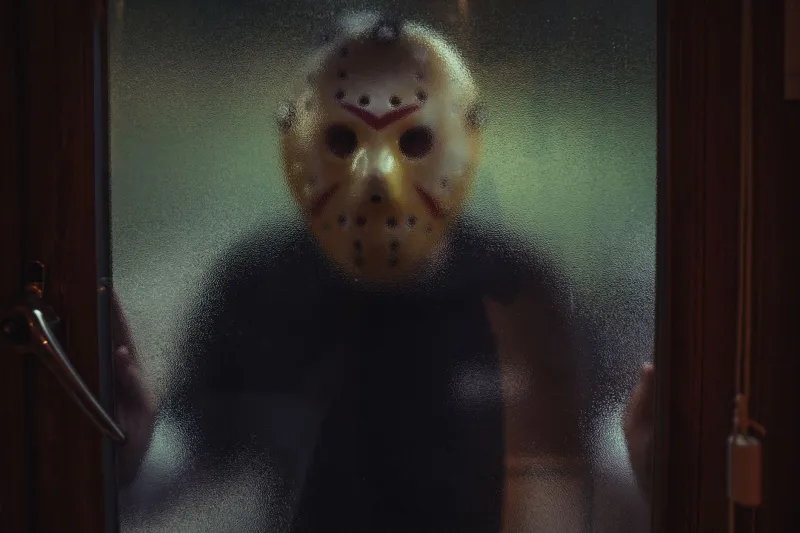
Haunted by the Role: Why Hollywood Keeps Pulling Aging Stars Back Into Characters They Already Said Goodbye To
There's a particular kind of Hollywood moment that feels triumphant on the surface but starts to curdle the longer you think about it. An actor — someone with decades of serious work behind them, someone who's pushed into uncomfortable territory and earned real respect — steps back into a costume they wore twenty years ago. The crowd goes wild. The trailer hits a hundred million views in a weekend. And somewhere in the middle of all that noise, a career quietly gets smaller.
We've been watching this happen in slow motion for a while now, but the pace has picked up considerably. Legacy sequels and franchise revivals have stopped being occasional events and started functioning more like a gravitational pull — one that's especially strong for actors who defined a generation of moviegoing and are now navigating the strange, underwritten territory of middle age in Hollywood.
The Math That's Hard to Argue With
Let's be honest about why this happens, because it's not mysterious. Studios know that audiences respond to familiarity, and the financial logic of bringing back a beloved character is almost impossible to argue against from a business standpoint. A recognizable face in a recognizable role reduces risk in a market that has become increasingly allergic to uncertainty.
For the actors themselves, the offers tend to be enormous — paychecks that dwarf what most prestige dramas can offer, plus the kind of marketing muscle that guarantees your face will be everywhere for six months. When you've spent years grinding through smaller projects trying to prove your range, a studio showing up with a nine-figure deal and a character millions of people already love is a genuinely difficult thing to walk away from.
So most of them don't walk away. And that's where things get complicated.
When the Character Becomes the Ceiling
The problem isn't returning to a beloved role once. It's what happens after. Because studios, once they've proven the nostalgia formula works, tend to want more of it. A successful legacy sequel becomes a franchise extension, which becomes a streaming spinoff, which becomes an obligation that fills your schedule and defines how the industry sees you.
Think about what that actually means in practical terms. When a casting director is putting together a serious drama — something with ambition, something that requires an actor to bring something genuinely new — they're looking at a performer who has spent the last several years embodying a character audiences already have a fixed emotional relationship with. The baggage isn't just cultural. It's professional. It changes what people believe you're capable of, and more importantly, it changes what projects you get offered in the first place.
Actors have talked about this dynamic in interviews for years, usually in carefully diplomatic language that doesn't quite say the quiet part out loud. But read between the lines of enough press junket conversations and the frustration is there — the sense that the work that was supposed to be a victory lap has started to feel more like a treadmill.
The Nostalgia Economy Doesn't Care About Your Arc
Here's what the nostalgia economy is fundamentally uninterested in: the idea that an actor is a person who grows, changes, and has something different to say at fifty than they did at thirty. The whole premise of the legacy sequel is that the thing audiences loved before is still the thing worth loving — maybe a little weathered, maybe a little wiser, but fundamentally the same.
That's a fine premise for a movie. It's a suffocating premise for a career.
The performers who've navigated this most successfully tend to be the ones who were ruthless about limiting their returns — who came back once, made the moment count, and then got out before the character became a permanent address. But that requires a kind of discipline that's hard to maintain when the offers keep coming and the cultural appetite for familiarity keeps growing.
For every actor who managed to sidestep the trap, there are several others who didn't, and whose later careers have been quietly swallowed by franchise commitments that left little room for anything else. We tend not to talk about this directly, because the movies themselves are often entertaining and the actors are clearly giving real effort. But the creative cost is real, even when it's invisible on screen.
What Gets Lost in the Revival
There's also something worth considering about what these cycles do to the original work — the films and performances that made the characters worth reviving in the first place. When a role gets revisited enough times, it starts to retroactively reshape how we remember the earlier version. The character becomes a franchise before it was ever a character. The original performance, which might have been genuinely surprising and alive, gets folded into a larger commercial mythology that flattens what made it interesting.
That's a loss for film culture in a way that doesn't get discussed enough. Part of what makes great screen performances enduring is their specificity — the sense that something real and unrepeatable happened in front of the camera at a particular moment in time. Franchise revivals, by their nature, are in the business of repeating. And repetition, however skillfully executed, is the enemy of that kind of specificity.
The Question Nobody Wants to Ask
The uncomfortable question underneath all of this is whether the industry actually wants its established performers to evolve — or whether it's more profitable to keep them tethered to the versions of themselves that audiences already paid to see.
For studios, the answer is probably obvious. Familiarity is a product, and actors who've built iconic characters are raw material for that product. The career evolution of a fifty-year-old performer is, from a purely commercial standpoint, less interesting than their ability to put on the old costume one more time.
But for the actors themselves, and for anyone who cares about cinema as something more than a delivery mechanism for nostalgia, that calculus should feel at least a little troubling. The performers who've done their most interesting work late in their careers — who've surprised us, unsettled us, made us see them differently — have almost always been the ones who found ways to resist the pull of what they were already known for.
The comeback trap is real, and it's getting harder to escape. The least we can do is notice it's there.