Shout It at the Screen: The Strange, Glorious Second Life of the Cult Movie
Photo: Unknown authorUnknown author, Public domain, via Wikimedia Commons
The film started at midnight, and by the ten-minute mark, half the audience was talking back to the screen. Nobody shushed them. That was the point.
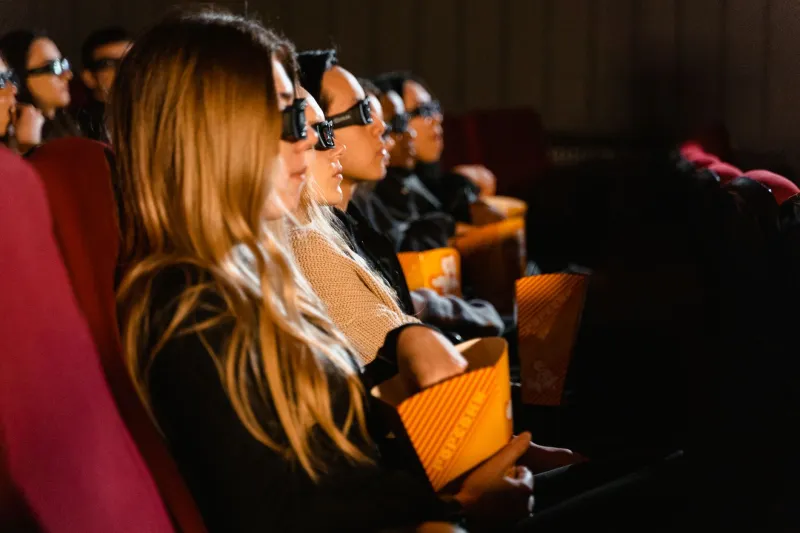
If you haven't been to a quote-along or a midnight screening lately, the experience can be disorienting. Props fly. Lines are recited in unison, with better timing than the actors. There are rituals, call-and-response cues, assigned roles. It looks a little like chaos. It is, in fact, one of the most tightly choreographed communal traditions in American entertainment — and it's quietly becoming the best argument for why movie theaters should exist at all.
Fifty Years of Doing the Time Warp
The lineage runs straight through The Rocky Horror Picture Show, which has played midnight screenings continuously since the mid-1970s — the longest-running theatrical release in history, a fact that becomes less surprising once you realize audiences never really stopped attending. They joined. Shadow casts perform the film live in front of the screen. Newcomers get initiated with rice, toast, and a set of instructions delivered with the solemnity of a religion.
Rocky Horror proved something Hollywood still hasn't fully absorbed: a film can be an instrument that audiences play together, and that experience cannot be replicated at home. No pause button survives a crowd. No living room holds fifty strangers shouting the same line.
The New Cult Classics
The tradition didn't die with the VHS era; it mutated. The Room spent two decades as the reigning champion of participatory bad-movie culture, with spoons and plastic footballs flying at the screen. The Big Lebowski spawned an entire festival economy. Showgirls found its people. Mommie Dearest became a holiday tradition in certain zip codes.
But the interesting development is how new films are now engineered — or at least received — with this afterlife in mind. Repertory programmers report that anything with quotable density, visual excess, and a wink in its eye has cult potential: Everything Everywhere All at Once sold out interactive screenings within months of release. Bottoms, Lisa Frankenstein, and the Midsommar director's-cut crowd all show the appetite expanding, not fading.
Why This Matters More Than Ever
Independent theaters have spent the last decade searching for a survival strategy, and the answer keeps turning out to be the same: give people a reason to leave the house that streaming mathematically cannot offer. Repertory houses from coast to coast — the New Beverly in LA, the Music Box in Chicago, the Alamo Drafthouse's calendar of quote-alongs, the Naro in Norfolk — have discovered that event programming outperforms first-run bookings, week after week.
There's a deeper thing happening, too. Sociologists have been sounding the alarm about the collapse of American third places — the spaces that aren't work or home where community actually forms. Midnight screenings are a third place with a projector. Regulars learn each other's names. The guy who throws the toast becomes a minor celebrity. Membership forms around a shared text, which is, historically speaking, how most communities got started.
In other words, the cult movie screening has become America's accidental community theater — not the community playhouse with its season subscriptions and lobby raffles, but something older and stranger: a room where a town gathers to perform its shared mythology back to itself.
The Audience Is the Product
Here's the reframe that matters. For a century, we've treated movies as private experiences that happen to occur in public. Cult screenings invert the formula. The film is the campfire; the audience is the story.
Studios have started noticing — some now actively court midnight crowds with anniversary rereleases and interactive event formats. But the healthiest version of this culture remains stubbornly grassroots, run by projectionists and programmers who book Clue for December because it feels right, not because a dashboard said so.
So find your local repertory house. Check the calendar for the quote-along, the sing-along, the midnight show. Sit in a crowd of strangers who know every word. It's the most old-fashioned thing you can do at the movies — and somehow, the most futuristic.