On Set and In Charge: How Intimacy Coordinators Became Cinema's Most Polarizing Creative Force

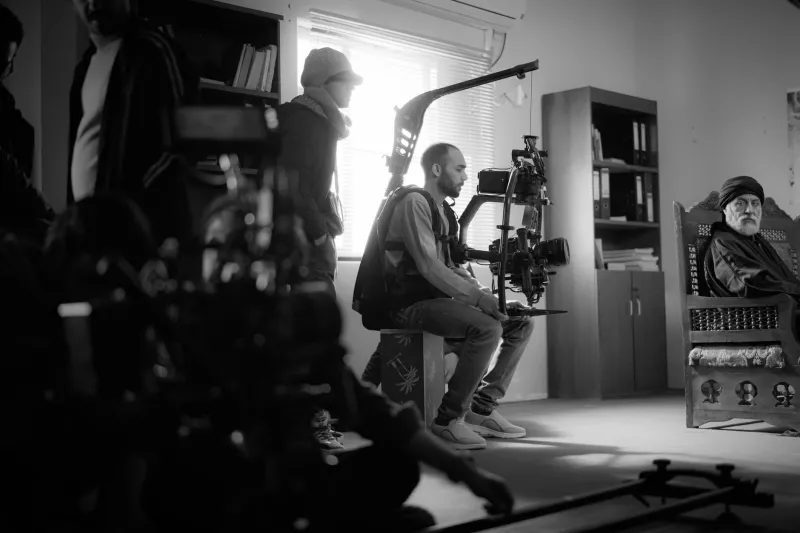
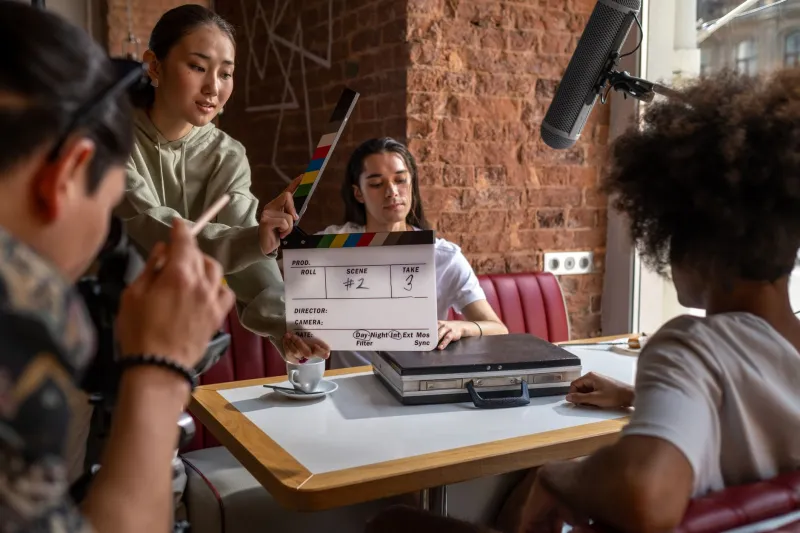
There's a moment on almost every film set where the director calls for quiet, the actors take their marks, and something deeply human gets captured on camera. For decades, what happened in that space — especially during intimate scenes — was largely dictated by whoever was holding the megaphone. That's changing. And depending on who you ask, it's either the most important shift in modern filmmaking or a slow erosion of the director's chair.
Intimacy coordinators have been part of the industry conversation since around 2018, when the post-#MeToo landscape made it clear that certain on-set dynamics needed a serious rethink. The role was designed to protect actors, establish consent, and create a structured process around scenes involving nudity, physical closeness, or simulated sex. Simple enough in theory. In practice? It's gotten a lot more complicated.
From Safeguard to Scene-Shaper
Here's the thing nobody really talks about openly: choreographing intimacy isn't just a logistical exercise. It's a creative one. When an intimacy coordinator sits down with actors before a scene and works through the physical language of a moment — what touch means, how bodies move in relation to each other, what the scene is emotionally communicating — they're doing something that looks a lot like directing.
And that's where the tension lives.
Some coordinators are careful to frame their work as purely facilitative. They'll tell you they're not there to make artistic decisions, they're there to make sure everyone feels safe enough to make those decisions freely. That framing makes sense on paper. But on a real set, with real time pressure and real creative stakes, the line between "I need you to adjust this movement for the actor's comfort" and "I think this scene would work better if..." can get genuinely blurry.
Actors who've worked with coordinators often describe the experience positively — sometimes enthusiastically. Many say the structure actually frees them up creatively, because they're not spending mental energy worrying about where a co-star's hands are going to land. But there's a quieter group of directors, mostly those who've built careers on instinct and improvisation, who feel like the role has inserted a new authority into a space that used to be entirely theirs.
The Auteur Problem
This is where things get genuinely messy. Cinema has a long tradition of directors who treat the set as their canvas — every decision, including the deeply uncomfortable ones, filtered through their singular vision. Think of the filmmakers who've built entire bodies of work around raw, unscripted vulnerability. For those directors, the idea of a third party mediating the most emotionally charged moments of a film isn't just inconvenient. It can feel like a fundamental challenge to how they understand their own craft.
Some have said so publicly. Others have grumbled off the record. There's a version of this argument that's completely legitimate: if an actor has consented to a scene, prepared for it, and trusts their director, why does there need to be an intermediary translating that relationship through a standardized framework?
But here's the counter-argument, and it's hard to dismiss: the history of filmmaking is full of situations where consent was assumed rather than established, where actors — particularly women and younger performers — felt pressure to comply with things they weren't actually comfortable with. The intimacy coordinator role didn't emerge in a vacuum. It emerged because something wasn't working.
Power, Hierarchy, and Who Gets to Decide
The deeper issue underneath all of this is really about power. Film sets have always been hierarchical spaces, and that hierarchy has historically protected some people while leaving others exposed. Intimacy coordinators, by design, introduce a counterweight to that hierarchy — someone whose explicit job is to advocate for the performer's wellbeing, even when that creates friction with the director or the production's schedule.
That friction is real, and it shows up in specific ways. A director might envision a scene unfolding spontaneously, with the camera catching something genuinely unplanned. An intimacy coordinator, working from a choreography framework, might see that same spontaneity as a risk — a situation where an actor could feel unexpectedly uncomfortable without a clear way to signal it. Neither of those positions is wrong, exactly. They're just coming from different priorities.
What's interesting is how studios have responded to this tension. Many have made intimacy coordinators standard on productions involving intimate content, effectively institutionalizing the role. That move has been welcomed by advocacy groups and many performers. But it's also created a new kind of bureaucracy on set — one that some filmmakers feel is more about liability management than genuine creative or ethical progress.
What the Role Actually Looks Like in Practice
Talk to working intimacy coordinators and you get a more nuanced picture than the debate usually allows. Most describe their day-to-day as collaborative and relationship-driven — a lot of conversation, a lot of listening, a lot of reading the room. The best ones seem to operate almost invisibly, building enough trust with both the director and the actors that their presence feels like a resource rather than a restriction.
They're also dealing with something genuinely novel: trying to professionalize an area of filmmaking that's never really had professional standards before. There's no long-established playbook here. The role is being defined in real time, on real productions, with real consequences when it goes wrong.
Some coordinators have formal training in movement, therapy, or both. Others came up through acting or choreography. The field is still figuring out what the baseline qualifications should be, which is part of why directors sometimes push back — not necessarily against the concept, but against coordinators who may not have the experience to navigate the specific creative demands of a particular project.
Progress or Precedent?
It's worth stepping back and asking what we actually want from this conversation. If the goal is a film industry where performers feel genuinely safe and empowered, intimacy coordinators seem like a reasonable part of that picture. If the goal is preserving the full creative authority of the director, the role introduces complications that aren't going away.
Most likely, the answer lives somewhere between those two positions — which is uncomfortable, but probably honest. The role is here, it's growing, and it's forcing conversations about creative authority, performer welfare, and who gets to make decisions on a film set that the industry has been avoiding for a long time.
Whether that counts as progress probably depends on where you're standing when the camera rolls.