Screen to Screen: How Virtual Auditions Cracked Open Hollywood's Talent Pool — and Quietly Closed Other Doors
For decades, landing a major role in a Hollywood production meant physically showing up. You flew into Los Angeles, you found a parking spot in Burbank, you sat in a waiting room next to twenty other people who looked unsettlingly similar to you, and then you performed for three minutes in front of people who were probably thinking about lunch. It was inefficient, expensive, and — depending on who you were — quietly hostile.
Then COVID-19 happened, and almost overnight, the casting room went digital.
What started as a stopgap measure has become a permanent feature of how Hollywood finds its talent. Self-tape submissions, virtual callbacks, remote chemistry reads — these aren't pandemic relics anymore. They're the industry standard. And the effects of that shift, both liberating and limiting, are still working themselves out across every level of the business.
The Door That Actually Opened
Let's give credit where it's due. For a lot of actors who weren't already living in LA or New York, the old audition system functioned less like an opportunity and more like a toll booth. Getting seen meant relocating, or at minimum dropping serious money on travel every time a promising role came up. That created a de facto filter that had nothing to do with talent and everything to do with geography and financial cushion.
Virtual auditions blew that open. An actor in Tulsa, Oklahoma or Baton Rouge, Louisiana could suddenly submit a self-tape for a studio project without booking a flight. Casting directors began receiving submissions from performers they would have never encountered through traditional channels — people from smaller cities, from rural areas, from communities that had never really been part of the Hollywood pipeline.
For underrepresented groups in particular, this mattered. Actors from marginalized communities who lacked the industry connections to get in the room found that the room, in a sense, had come to them. The barrier of physical proximity — which had always functioned as a soft class and race filter — was temporarily dissolved.
Some genuinely surprising casting decisions in the years since 2020 trace back directly to this expanded pool. Casting directors themselves have acknowledged discovering performers they would never have seen otherwise.
The New Gatekeepers Nobody Talks About
Here's the part that doesn't get discussed as much: removing one set of barriers didn't mean removing all of them. It meant swapping them out.
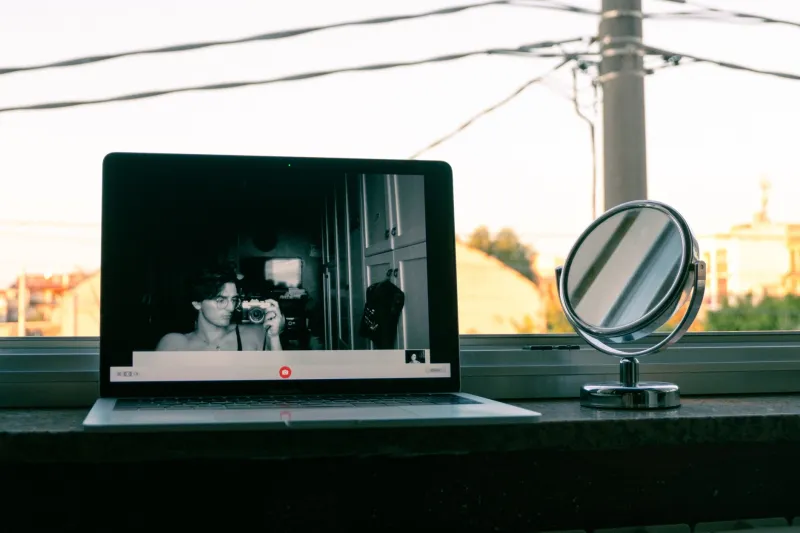
Self-tape culture has its own unspoken requirements. You need a decent camera — most smartphones technically qualify, but there's a visible quality gap between a $800 iPhone and a $200 Android. You need good lighting, which means either buying a ring light or living somewhere with reliable natural light. You need a clean, neutral background, which isn't a given if you share a small apartment with three roommates. You need reliable internet to upload large video files, which is still not evenly distributed across the country.
None of these are impossible obstacles, but they add up. And casting directors, who are now processing hundreds of self-tapes for a single role, have developed instinctive responses to production quality. A tape that looks professional signals something — even if what it signals is mostly that the actor had access to better equipment, not necessarily better instincts.
There's also a more subtle issue around what self-tapes actually capture. In a room, a casting director can redirect an actor, push them toward a different interpretation, see how they respond to adjustment. That responsiveness — the ability to take a note and immediately shift — is a core professional skill. A self-tape is a finished product. It shows you one version of an actor's choices, not their range under pressure. Some performers who are extraordinary in collaborative settings look flat on a self-tape. Others who are technically polished but less adaptable look great.
The format, in other words, has its own aesthetic biases. It rewards a certain kind of performer.
What the Algorithm Wants
Layered on top of the format question is the growing role of casting software and submission platforms. Tools that help casting directors manage high volumes of digital submissions have started incorporating search and sorting features — filters based on physical characteristics, previous credits, follower counts on social media, and in some cases, AI-assisted preliminary screening.
This is where things get genuinely complicated. If an algorithm is trained on historical casting data, it's being trained on a history that already had significant representation gaps. Asking that algorithm to identify "viable" candidates for a role risks encoding old biases into a new system that feels more objective because it involves a computer.
Some casting directors are aware of this and actively work around it. Others are leaning into efficiency tools without fully interrogating what those tools are optimizing for. The industry hasn't had a serious, public reckoning with the question of algorithmic bias in casting — and until it does, the technology will keep making decisions that nobody's fully accountable for.
The Relationship That Changed Most
Beyond the question of who gets seen, virtual auditions have fundamentally altered the working relationship between actors and casting directors. The old in-person dynamic had its problems — power imbalances, the physical vulnerability of performing in a strange room — but it was also genuinely relational. Casting directors built their reputations partly on their ability to read people in person, to sense potential that wasn't fully visible on a page.
That relational dimension has eroded. Actors are now essentially producing short films about themselves and sending them into a void. Feedback is rare. Callbacks are often the first human contact in a process that may have already involved dozens of submissions. The work of acting — which is fundamentally about connection, about reacting to another person in real time — is being evaluated through a medium that strips most of that away.
For established actors with strong reputations, this matters less. Their name carries context that a self-tape doesn't need to provide. For emerging talent trying to break through, the loss of that in-person connection can mean the difference between being remembered and being forgotten in a folder.
Where This Leaves the Industry
The honest answer is that virtual auditions did democratize access in real and meaningful ways. The geography problem was real, and removing it created genuine opportunities that hadn't existed before. That's not nothing — it's actually significant.
But democratizing access to the audition process isn't the same as democratizing outcomes. The new system has its own hierarchies, its own filters, its own blind spots. And because those filters feel more neutral — technology, after all, doesn't have a face — they're easier to overlook.
Hollywood has a habit of congratulating itself for structural changes before checking whether the structure actually changed. Virtual auditions are a case study in that tendency. The casting couch didn't just go digital — it got a software update. Whether the new version is more equitable than the old one depends entirely on whether the people running the system are willing to keep asking that question.