Sensory Overload Cinema: How Hollywood Is Rewiring Your Brain One Cut at a Time
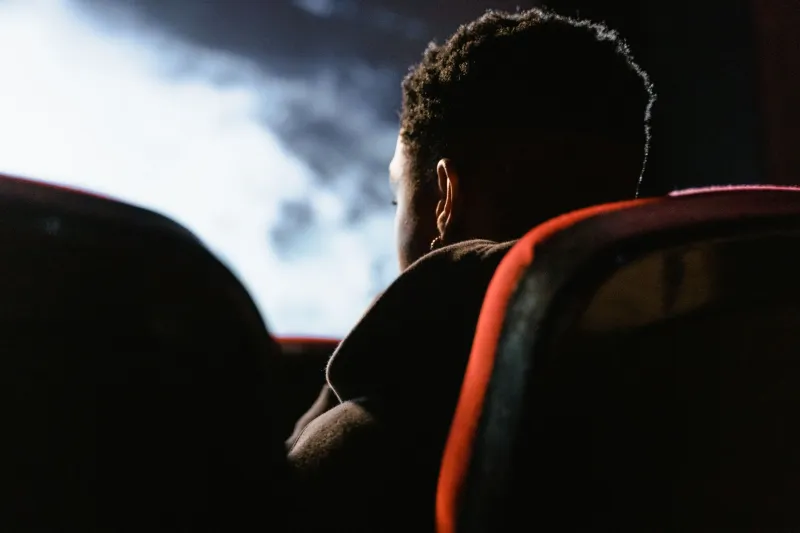
Something feels different about going to the movies lately. Not just different in a "wow, that was intense" kind of way — different in the way a too-loud restaurant feels after an hour. You walk out vaguely exhausted, slightly rattled, and struggling to recall a single scene you actually sat with. You were stimulated, sure. But were you moved?
That gap between stimulation and genuine emotional engagement is where a growing number of filmmakers, editors, and brain scientists are planting a flag — and what they're finding isn't exactly flattering to the industry.
The Numbers Don't Lie
Average shot length in Hollywood films has been shrinking for decades. In the 1970s, a mainstream American film averaged around eight to ten seconds per shot. By the 2010s, that number had dropped to somewhere between three and five seconds for major action releases. Some contemporary blockbusters push even shorter — rapid-fire sequences where cuts happen every one to two seconds, sometimes faster.
At the same time, sound mixing has grown dramatically more aggressive. Dialogue gets buried under swelling scores and thunderous effects. Bass frequencies are pushed to the physical threshold of discomfort. According to audio engineers who've worked on major studio releases, the pressure to make films "hit harder" in the first fifteen minutes — before restless viewers mentally check out — has become a defining creative constraint.
This isn't happening by accident. It's a calculated response to a very real problem: audiences today are more distracted than ever, and studios know it.
Your Phone Is in the Room Even When It Isn't
The smartphone didn't just change how we communicate — it fundamentally altered how our brains expect to be entertained. Neuroscientists who study attention and media consumption point to what some call "context-switching conditioning": years of scrolling through short-form content has trained our nervous systems to anticipate novelty on a near-constant basis.
When that novelty doesn't arrive fast enough, the brain gets restless. It starts looking for an exit. And in a theater — where the phone is theoretically in your pocket — filmmakers have responded by essentially building the phone's stimulation patterns directly into the film itself.
Dr. Carmen Vidal, a cognitive neuroscientist whose research focuses on media attention at a university in the Pacific Northwest, describes it this way: "What we're seeing is an arms race. The brain habituates quickly. So filmmakers escalate — more cuts, more sound, more motion — to keep the orienting response firing. But habituation catches up. Then you have to escalate again."
The orienting response she's referring to is the brain's automatic reaction to sudden change in the environment — a flash of light, a loud sound, rapid movement. It's involuntary. You can't not respond to it. And modern blockbuster filmmaking has become extraordinarily skilled at triggering it on a loop.
What Editors Are Actually Dealing With
Veteran editors — the people whose fingerprints are literally on the pacing of every film — describe a creative environment that has shifted considerably over the past fifteen years.
One editor with credits across several major studio franchises, speaking candidly but not for attribution, put it bluntly: "There's a note that comes from marketing now that didn't used to exist. It's basically: 'The first ten minutes can't breathe.' That's the actual language. Breathing is bad. Breathing means someone might reach for their phone."
The result is films that open with a kind of sensory assault — establishing tone not through character or atmosphere, but through sheer kinetic force. And once that baseline is set, the film is locked into maintaining it. Slowing down feels like a malfunction.
What gets lost in that framework is the kind of cinematic grammar that once made films genuinely memorable. The held shot. The silence before a revelation. The face that just sits there and lets you read it. These are the moments that tend to live in your memory for years — and they require the one thing modern studio filmmaking increasingly can't afford to give you: time.
Creative Cost vs. Commercial Logic
It's worth being fair here. Studios aren't wrong that attention is harder to capture than it used to be. Streaming has conditioned viewers to bail on content within minutes. TikTok has compressed entertainment expectations into fifteen-second windows. The competitive landscape for eyeballs is genuinely brutal, and a $200 million production needs to justify itself in opening-weekend numbers.
But filmmakers working outside that system — and increasingly, some working inside it — are pushing back on the idea that sensory escalation is the only available response.
Directors like Kelly Reichardt, Kogonada, and Chloe Zhao have built devoted American audiences with work that moves at a completely different tempo. Their films breathe. They trust stillness. And audiences, given the chance to encounter that kind of cinema, often report something that's increasingly rare at the multiplex: the feeling of having actually experienced something, rather than survived it.
Even within the blockbuster space, there are counterexamples. Christopher Nolan's films tend to be longer and more deliberately paced than his peers', yet they consistently outperform expectations. Denis Villeneuve built two enormous science fiction epics — Arrival and the Dune films — that are remarkably restrained by contemporary action standards, and they've become cultural touchstones.
The commercial logic that demands relentless stimulation may be less airtight than studios assume.
When Engagement Becomes Exploitation
The more uncomfortable question is an ethical one. If filmmakers know they're triggering involuntary neurological responses — essentially bypassing conscious engagement to manufacture a feeling of excitement — at what point does that stop being craft and start being manipulation?
Dr. Vidal doesn't think the industry has fully reckoned with this. "There's a real difference between a film that earns your emotional response and one that just hijacks your nervous system. The first leaves you with something. The second leaves you depleted."
That depletion is showing up in how audiences talk about movies. Social media discourse around big releases is increasingly dominated by immediate reactions — loud, energetic, superlative — that evaporate within days. Films that "broke the internet" on opening weekend are forgotten by the time the next one arrives. The stimulation cycle has become so compressed that nothing gets the chance to settle into genuine cultural memory.
What Cinema Actually Owes You
At its best, movies have always done something a bit miraculous: they've taken you somewhere else, made you feel something real, and sent you back into your own life slightly changed. That's not a small thing. And it doesn't require silence or slow cinema exclusively — plenty of genuinely thrilling, fast-paced films have achieved it.
But it does require that filmmakers stay on your side. That they're trying to give you an experience, not just manage your attention span like a resource to be extracted.
The escalation happening right now in mainstream Hollywood — the faster cuts, the louder mixes, the relentless visual noise — reads less like artistic ambition and more like panic. An industry afraid that if it stops shouting, you'll look away.
Maybe the more interesting question isn't how to keep you from looking away. It's whether what's on screen is worth looking at in the first place.