Drawing the Line: How Hollywood's New Intimacy Rules Are Changing What Gets Told On Screen
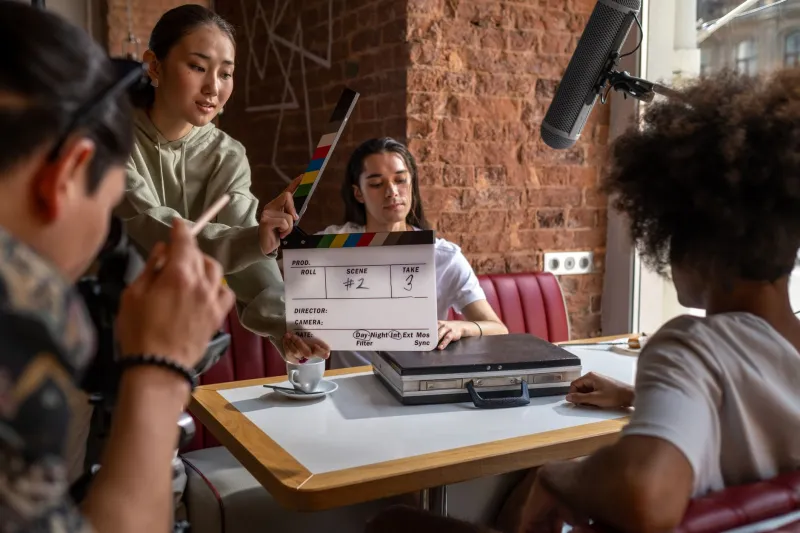
There's a conversation happening in Hollywood that nobody quite knows how to finish. Actors are showing up to press junkets and podcast interviews with a new kind of talking point — not about the role they trained for or the director they admired, but about the scenes they negotiated out of. The scenes they won't film. The lines they drew before the cameras ever rolled.
It's become almost a badge of honor in certain circles. And depending on who you ask, that's either a sign of a healthier industry or a symptom of something cinema is quietly losing.
How We Got Here
The rise of intimacy coordinators didn't happen in a vacuum. It arrived on the heels of #MeToo, a cultural reckoning that tore through Hollywood starting in 2017 and left the industry scrambling to rebuild basic trust between the people who make movies and the people who fund them. Stories of coercion, manipulation, and outright abuse on closed sets had been an open secret for decades. When that secret finally cracked open, the demand for structural change was immediate.
Intimacy coordinators — professionals trained to choreograph and supervise scenes involving nudity, simulated sex, or physical vulnerability — became one of the more visible responses. Major studios began requiring their presence on qualifying productions. Actors' contracts started including detailed riders specifying exactly what would and wouldn't be filmed. The Screen Actors Guild pushed for clearer language around consent and prior notification.
By most accounts, these changes were long overdue. The horror stories they were designed to prevent were real, well-documented, and had derailed careers and damaged people in ways that lasted far longer than any film's theatrical run.
The Safety Argument Is Solid. The Conversation Doesn't End There.
Here's where things get complicated, and where the entertainment conversation tends to get a little uncomfortable.
Protecting actors from exploitation is not a debatable goal. Nobody serious is arguing otherwise. But a growing number of filmmakers — some speaking on record, many more speaking anonymously — are raising a separate question: when the boundaries around vulnerability become highly contractual, does something essential slip out of the frame?
Cinema has always relied on a kind of controlled risk. The performances that tend to stay with audiences — the ones that get quoted at dinner tables and rewatched on streaming years later — often came from actors who went somewhere genuinely unguarded. Think of the raw, uncomfortable energy in films like Requiem for a Dream, the emotional nakedness in Blue Valentine, or the physical exposure in The Wrestler. Those moments weren't comfortable to shoot. They weren't supposed to be.
Some directors argue that the presence of a coordinator, however skilled and well-intentioned, changes the temperature of a scene in ways that are hard to quantify but easy to feel. Others suggest that when actors pre-negotiate every inch of what they'll show or simulate, the spontaneity that makes intimacy feel real on screen gets quietly edited out before production even begins.
What Actors Are Actually Saying
The more interesting voices in this debate belong to the actors themselves, and they're not all saying the same thing.
Some performers — particularly those earlier in their careers — have been vocal about how much more empowered they feel under the new system. Knowing that a scene's parameters are locked in writing before you step on set changes the psychological math entirely. You can be present in the work instead of spending half your mental energy bracing for what the director might push for next.
Others, including some veterans who built careers in an era with far fewer protections, describe a more ambivalent relationship with the new norms. A few have said publicly that they now think twice before accepting roles that require significant emotional or physical vulnerability — not because they're unwilling, but because the negotiation process itself has become its own kind of barrier. The paperwork, the riders, the coordinator meetings — for some, it adds a layer of self-consciousness that's hard to shake once you're actually in front of the camera.
There's also a class dimension that doesn't get discussed enough. A-list actors have the leverage and the legal teams to negotiate intimacy clauses that genuinely protect them. Younger performers, day players, and actors still trying to break through often don't. The system that's supposed to democratize safety on set can end up working much better for people who were already in a position to protect themselves.
What This Means for the Stories Being Told
The downstream effect on storytelling is real, even if it's hard to measure precisely. Studio development executives will tell you — quietly, again — that certain scripts are getting softer before they reach production. Scenes that once would have pushed into genuinely uncomfortable territory are being pre-emptively dialed back during development, sometimes because of what actors have signaled they won't do, sometimes because producers are getting ahead of potential friction on set.
The result isn't always bad cinema. Constraint has always been one of filmmaking's more underrated creative forces — some of the most emotionally effective intimate scenes in recent memory have been built almost entirely on suggestion, implication, and the faces of actors rather than anything explicit. Restraint, done right, hits harder than exposure.
But there's a difference between artistic restraint and institutional caution. One is a creative choice. The other is a liability calculation. And audiences, even when they can't name exactly what's missing, tend to feel that difference in their bones.
The Real Question Nobody's Asking Loudly Enough
The conversation around intimacy on set has been framed, almost exclusively, as a binary: safety versus creative freedom. But that framing does a disservice to both sides.
The more useful question might be whether the industry is building systems that are genuinely flexible enough to protect people without flattening the emotional range of the work. Whether intimacy coordinators can function not just as consent managers but as genuine creative collaborators who help directors and actors find new ways into difficult material rather than simply routing around it.
Some are already doing exactly that. The coordinators who've earned the most respect in the industry aren't the ones who simply enforce limits — they're the ones who help actors access vulnerability safely, who treat the choreography of intimacy with the same craft attention a fight coordinator brings to an action sequence.
That version of the role, done well, doesn't limit cinema. It might actually expand it.
The question is whether Hollywood is patient enough — and humble enough — to let that evolution happen on its own terms, rather than letting liability fears write the ending before the story's even begun.