Punching Above Their Weight: How Indie Distributors Are Leaving Hollywood Studios in the Dust
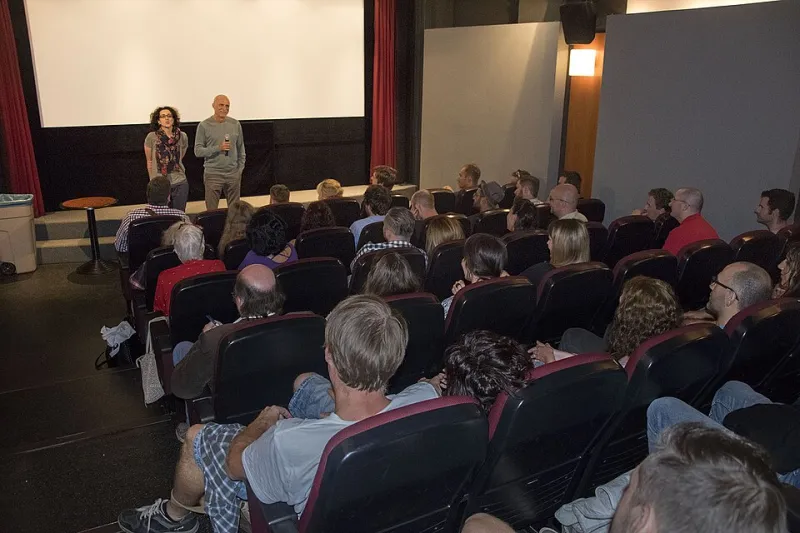
Photo: Elena Ringo, CC BY-SA 4.0, via Wikimedia Commons
There's a particular kind of satisfaction that comes from watching the underdog not just compete, but absolutely clean up. And right now, that's exactly what's happening in American cinema. While the major Hollywood conglomerates keep doubling down on sequels, reboots, and cinematic universes, a scrappier breed of distributor is quietly — and sometimes not so quietly — stealing the whole show.
We're not just talking about critical darlings that disappear after awards season. We're talking about films that crack the cultural code, dominate social media for weeks, and pull audiences into theaters who haven't bought a ticket in years. The studios spent decades building the playbook. Indie distributors are burning it.
The A24 Effect: More Than a Logo
If you've spent any time in film circles over the last decade, you already know the name. A24 has become something close to a cultural institution, and that's a genuinely weird thing to say about a film distribution company that was founded in 2012 with no back catalog, no franchise IP, and no safety net.
What A24 had — and still has — is taste. And it turns out that taste, paired with smart marketing and a willingness to let filmmakers be genuinely strange, is a remarkably powerful business strategy.
Consider Everything Everywhere All at Once. On paper, a multiverse sci-fi film about a Chinese-American laundromat owner isn't exactly a guaranteed blockbuster. But A24 trusted the Daniels, let the film breathe, and watched it become one of the highest-grossing A24 releases ever — not to mention a seven-Oscar juggernaut. That kind of outcome doesn't happen by accident. It happens when a distributor understands that audiences are smarter and hungrier for originality than the studios tend to give them credit for.
But A24 isn't the only player rewriting the game. NEON, Mubi, and Magnolia Pictures are all carving out their own lanes, each with a distinct identity and a devoted audience that follows their releases the way fans follow a director or an actor.
Marketing That Actually Talks to People
Here's one place where indie distributors are genuinely lapping the major studios: marketing. Big studio campaigns often feel like they were designed by committee — safe, loud, and weirdly forgettable despite the enormous budgets behind them. Indie distributors, working with far less money, have had to get creative. And creative, it turns out, resonates.
A24 built a cult following partly through social media presence that feels like it was written by someone who actually watches movies and thinks about them. Their campaigns lean into the weird, the specific, the emotionally resonant. When Hereditary came out, the marketing didn't try to make it palatable — it leaned hard into the dread, and horror fans showed up in droves.
NEON pulled a similar move with Parasite, carefully building word-of-mouth through limited release before expanding nationally. By the time most Americans were sitting down to watch it, the film felt like something they'd been waiting for without knowing it. That kind of cultural momentum is almost impossible to manufacture with a traditional studio rollout.
Social media has been a genuine equalizer here. A compelling trailer clip, a striking piece of poster art, a single unforgettable scene — any of these can go viral and do the kind of awareness work that used to require tens of millions in ad spend. Indie distributors have been faster to understand and exploit this reality than their bigger, slower-moving counterparts.
Betting on Directors, Not Franchises
Maybe the most fundamental difference between how indie distributors operate and how the major studios function comes down to where they place their bets. Studios bet on IP — on the recognizable brand, the existing fanbase, the sequel potential. Indie distributors bet on filmmakers.
That distinction matters more than it might seem. When you bet on IP, you're essentially betting that audiences will show up out of habit or brand loyalty. When you bet on a filmmaker, you're betting that their vision is compelling enough to create new fans, to surprise people, to generate the kind of genuine enthusiasm that spreads organically.
A24's roster reads like a who's-who of contemporary American cinema — Ari Aster, Robert Eggers, Sofia Coppola, Greta Gerwig (before she went full studio with Barbie), Barry Jenkins. These aren't just talented people. They're filmmakers with distinct voices that audiences have learned to trust. That trust is a form of brand loyalty, but it's built on artistic credibility rather than nostalgia or franchise familiarity.
The studios have largely ceded this territory. When a visionary director walks into a major studio meeting, they're often asked to subordinate their vision to the demands of the universe, the brand guidelines, the test screening data. Indie distributors, working at a different scale, can afford to say yes to the weird pitch — and that's where the magic tends to live.
The Numbers Don't Lie
Skeptics might argue that indie distributors are winning the conversation but not the box office. But that argument is getting harder to sustain. Everything Everywhere All at Once grossed over $70 million domestically on a production budget of around $14 million. Midsommar, Uncut Gems, The Witch — these films didn't just recoup their budgets, they delivered returns that would make any studio executive jealous.
More importantly, they did it without the kind of catastrophic downside risk that comes with a $200 million superhero film that underperforms. When a big studio tentpole misses, it really misses — the losses can be staggering. Indie distributors, operating with leaner budgets and more targeted release strategies, have a fundamentally different risk profile. A modest theatrical run followed by strong streaming performance and home video sales can make a film genuinely profitable even without a massive opening weekend.
What This Means for American Cinema
The rise of indie distributors as genuine cultural and commercial forces is good news for anyone who loves movies. It means there's a viable path for unconventional stories to reach large audiences. It means filmmakers with something genuinely new to say have somewhere to take their work. And it means audiences have more real choices than the multiplex menu of sequels and reboots might suggest.
It also puts pressure on the major studios to reckon with what they've become. When a film made for a fraction of your budget consistently outperforms your franchise output in cultural relevance and return on investment, that's a signal worth paying attention to.
Hollywood has always been in the business of stories. The indie distributors are just reminding everyone what a good one looks like.