Dark Screens, Empty Lots: The Slow Disappearance of Movie Theaters from Small-Town America
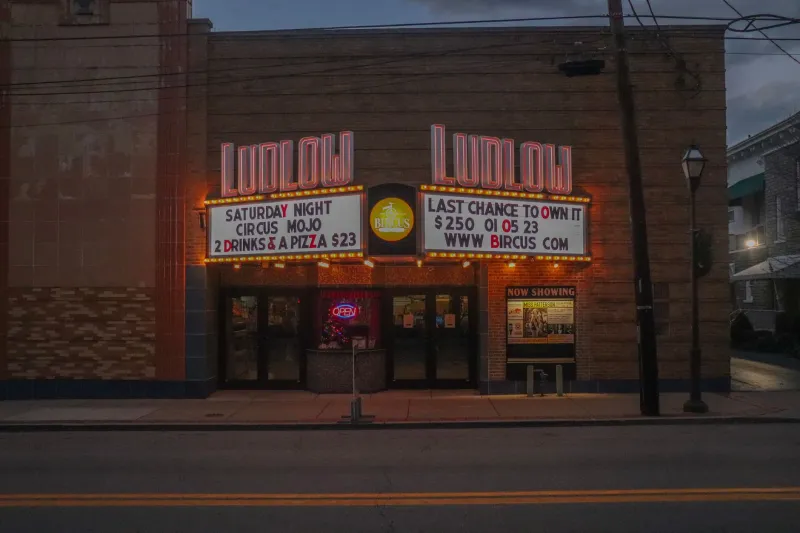
Drive through enough of the American heartland and you'll start to notice a pattern. Shuttered storefronts. A closed diner. And somewhere near the center of town, a former movie theater — marquee letters still half-hanging, ticket booth dark, the whole thing either boarded up or converted into a church, a storage unit, or nothing at all.
It's easy to chalk this up to streaming. Netflix did it, right? Everyone's watching from their couch now. But that explanation is too clean, too convenient. The real story of why movie theaters are vanishing from small-town and mid-sized American cities is messier, more structural, and frankly more alarming — especially if you believe that cinema is more than a product. It's a place where communities gather and recognize themselves.
The Numbers Don't Lie — But They Don't Tell the Whole Story Either
Since 2019, the United States has lost hundreds of movie theaters, with closures disproportionately concentrated outside major metropolitan areas. According to data from the National Association of Theatre Owners, the total screen count in the U.S. has declined steadily, and the theaters that closed weren't primarily the boutique art houses in Brooklyn or the premium IMAX complexes in Los Angeles. They were the single-screen Main Street theaters in towns like Parsons, Kansas. The three-screen multiplex anchoring a strip mall in Carbondale, Illinois. The family-owned cinema in Alpena, Michigan that had been running since the 1940s.
What's driving this? A few things at once. Streaming absolutely plays a role — theatrical windows have compressed, and studios have become increasingly comfortable releasing films directly to digital platforms. But the deeper issue is economic geography. Theater chains, like most retail businesses, make their real money in high-density markets. When a corporate operator runs the math on a 400-seat house in a town of 8,000 people, the numbers often don't pencil out — especially when that operator is carrying debt from aggressive pre-pandemic expansion.
Corporate Consolidation and the Rural Blind Spot
Here's something that doesn't get talked about enough: the consolidation of the theater industry into a handful of major chains has been quietly devastating for smaller markets. When AMC, Regal, and Cinemark dominate the landscape, corporate decisions get made based on portfolio performance across hundreds of locations. A theater in rural Nebraska isn't just competing with the local streaming habits of its audience — it's competing internally against the chain's flagship locations in Dallas and Chicago for investment, upgrades, and continued operation.
Independent theater owners, meanwhile, have faced their own brutal arithmetic. Equipment upgrades — particularly the industry-wide shift to digital projection — cost hundreds of thousands of dollars that small operators simply didn't have. Federal programs like the Save Our Stages Act helped some live music venues, but movie theaters largely fell through the cracks of pandemic relief in ways that still sting.
The result is a market that increasingly serves the coasts and major urban centers while leaving a growing stretch of the country cinematically dark.
What a Theater Actually Means to a Town
Talk to anyone who grew up in a small American city with a movie theater and ask them what it meant. You'll hear variations on the same story. It was where you went on a first date. Where your parents took you when it rained. Where the whole town showed up for a summer blockbuster and sat shoulder-to-shoulder with neighbors you might otherwise never speak to. It was, in a very real sense, the town's shared living room.
That might sound sentimental. It's also sociologically real. Researchers who study community cohesion have long pointed to shared public spaces — libraries, parks, theaters — as critical infrastructure for social trust. When those spaces disappear, something frays. People don't suddenly become isolated, but the casual, low-stakes opportunities to exist alongside your neighbors in a shared experience quietly vanish.
For younger residents of these towns, losing a theater isn't just an inconvenience. It's one more signal that their community isn't worth investing in. It accelerates the feeling — already acute in many rural areas — that culture happens somewhere else, for someone else.
Communities Are Fighting Back — Creatively
Not every town is accepting the loss quietly. Across the country, communities have responded to theater closures with a kind of scrappy ingenuity that's genuinely moving.
In several small Midwestern cities, local nonprofits have stepped in to purchase shuttered theater buildings and convert them into community arts spaces — showing films alongside live performances, hosting local film festivals, and programming everything from classic movie nights to youth filmmaking workshops. The Venue in Emporia, Kansas is one example of a former commercial theater that found new life as a multipurpose cultural hub.
Elsewhere, drive-in theaters have seen a genuine revival. Some were never fully abandoned; others have been rebuilt from scratch by entrepreneurs who recognized that the format offered something streaming never could — a communal outdoor experience that doesn't require a building. Drive-ins in states like Missouri, Ohio, and Montana have reported strong attendance in recent years, particularly among younger audiences who experience the format as novel rather than nostalgic.
Pop-up outdoor screenings have become a fixture in towns that lost their indoor venues. Local libraries, parks departments, and civic organizations have filled the gap with seasonal film programs — free screenings in public parks, projected onto the sides of buildings, folding chairs and blankets replacing stadium seating. It's not a substitute for a real cinema, but it's a refusal to let the shared movie-going experience disappear entirely.
The Streaming Argument Has a Flaw
Proponents of the everything-goes-streaming view often argue that rural audiences are actually better served by digital platforms — no need to drive 45 minutes to a theater when you can watch anything from home. There's surface logic to that. But it misunderstands what theaters provide that streaming fundamentally cannot.
Streaming is a solitary or at best a household experience. It's optimized for individual consumption, algorithmic personalization, and frictionless convenience. A movie theater is the opposite: it's a public act of attention, a shared surrender to a story in a darkened room with strangers. Those are not interchangeable experiences. Losing one doesn't mean the other adequately compensates.
There's also a class dimension worth naming. The assumption that everyone has reliable high-speed internet, a decent screen, and the disposable income for multiple streaming subscriptions is a very urban, very middle-class assumption. In plenty of rural American households, a $12 movie ticket at a local theater — if one still existed — would be a more accessible cultural experience than managing the cost and infrastructure of modern streaming.
What Comes Next
The closure of movie theaters in small-town America isn't an inevitable market correction. It's a policy failure, a corporate blind spot, and a cultural loss that deserves to be treated seriously. Some states have begun exploring subsidy models for rural theaters similar to what several European countries use to maintain cinema access outside major cities. Federal arts funding, if it were seriously directed toward community exhibition infrastructure, could make a real difference.
But beyond policy, this is a question about what kind of cultural life we want to exist outside the major metros. If the answer is that cinema — real, communal, shared cinema — is only for people who live in cities, then we've already decided something important about who culture is for in this country.
The lights don't have to stay off. But keeping them on is going to take more than nostalgia. It's going to take investment, imagination, and a genuine belief that the towns between the coasts deserve a seat in the dark too.