Before the Movie, the Ritual: What We Lose When We Skip the Opening Credits
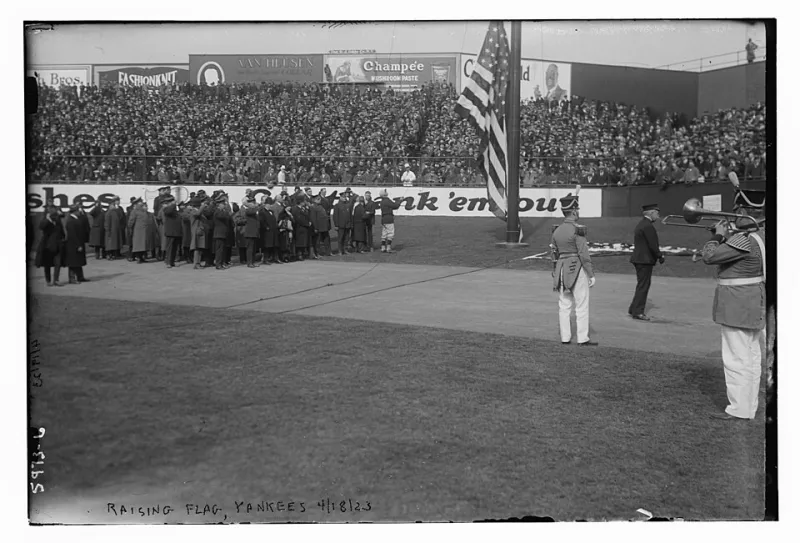
Photo: Bain News Service, publisher, Public domain, via Wikimedia Commons
There was a time when a movie began before the first scene. The screen went dark, the music swelled, and a set of names floated into place — not just credits, but a mood, a promise, a threshold. The opening title sequence was a short film before the film, a piece of design that told you what kind of experience you were about to have.
In 2026, that ritual is easy to skip. Streaming interfaces give us a button for it. Autoplay rolls past it. The opening credits have become friction in a system designed to keep us watching, not to make us sit still. And that small convenience has changed the way movies announce themselves.
The sequence as a short film
The classic example is Saul Bass, whose work on films like Vertigo and Psycho turned typography into suspense. Bass understood that a title sequence could do more than list names. It could set a rhythm, plant an image, and prepare the audience for the director's voice. Later designers pushed the form further: Maurice Binder's Bond openings, Kyle Cooper's unsettling work on Se7en, the kinetic collage of so many 1990s openings. These were not decorations. They were the first scene.
The title sequence also did something practical. It gave the audience time to settle. You found your seat, adjusted to the dark, and let the movie take control. It was a handshake between the film and the viewer.
The interface treats art as friction
Streaming changed the contract. A platform wants you to start watching and keep watching. The opening credits are a delay, so the interface offers a skip button. Autoplay moves to the next episode before the last one has finished breathing. The design logic is not evil; it is just built for engagement metrics, not cinema.
But the effect is real. When the opening credits are treated as a hurdle, filmmakers learn to put them somewhere else. The main-on-end credit sequence — popularized by Marvel and now common in blockbusters — moves the visual flourish to the final reel. That can be fun, especially when there is a post-credits scene waiting. But it is not the same thing. An opening sequence is a welcome. A closing sequence is a reward. One invites you in. The other asks you to stay a little longer.
The craft that disappears
The title sequence is a specialized craft. It combines typography, motion graphics, compositing, music editing, and a deep understanding of tone. The designers who make them are not just decorators. They are storytellers working in a tiny, precise format. When mainstream movies stop commissioning opening sequences, that craft loses a major outlet.
Television has picked up some of the slack. The opening titles of a prestige drama or a genre series can be a mini-masterpiece, and streamers still invest in them because they become part of a show's identity. But films are different. A movie has one shot at its opening. If it skips the ritual, it skips a chance to define itself.
The people keeping it alive
There is a quiet resistance. Boutique design studios still build title sequences for independent films, horror movies, and the occasional studio release that wants a distinctive opening. Repertory cinemas and boutique Blu-ray labels treat the sequence as part of the restoration, not a removable extra. Film festivals program title design showcases. Designers share work online, and younger filmmakers study the classics.
Some of this is nostalgia. But not all of it. The best title sequences are proof that a movie can be designed, not just assembled. They remind us that the first few minutes are not a formality. They are a chance to set a spell.
A handshake, not a hurdle
The skip button is fine for television. Sometimes you just want to get to the episode. But cinema needs a threshold. A movie should announce itself. It should tell you that you are somewhere else now, in someone else's rhythm, about to see something you did not choose moment by moment.
When we skip the opening credits, we skip the handshake. We lose a little of the ritual that makes moviegoing feel like an event rather than a stream. The form is still alive, but it is quieter than it used to be. The filmmakers and designers who still care about it are not fighting the future. They are just reminding us that a beginning is not a delay. It is part of the story.